









Braintrust
"If you think that your customers are using AI search or AI tools like ChatGPT, Claude, or Claude Code, you should be investing there. If you don't do it right now, you'll fall behind everyone."




Ahrefs is an established SEO platform that added AI visibility tracking as a feature within its broader suite.
Gauge was purpose-built specifically for GEO, with an AI agent that connects your GSC, GA4, and Semrush data and takes you from visibility insight to published content in one place.
If you need a full SEO toolset, Ahrefs covers that well. If your focus is on winning AI search, Gauge was built for that specific problem.
For AI visibility specifically, yes.
Ahrefs charges for AI prompt tracking through its Brand Radar add-on, on top of base plans that start at $129/month.
Gauge charges $600 for 600 prompts, which works out to $1 per prompt.
Ahrefs’ standalone prompt tracking packages start at $199/month per AI platform index. If you're paying for multiple indexes to get full coverage, the costs compound quickly.
Ahrefs is one of the most trusted platforms in traditional SEO, with best-in-class tools for keyword research, backlink analysis, and rank tracking.
Gauge operates in a different but adjacent layer: AI search visibility.
Strong Google rankings do not guarantee AI visibility, since AI models generate their own answers by scanning 50–60 results per query and often surface different sources than a SERP would.
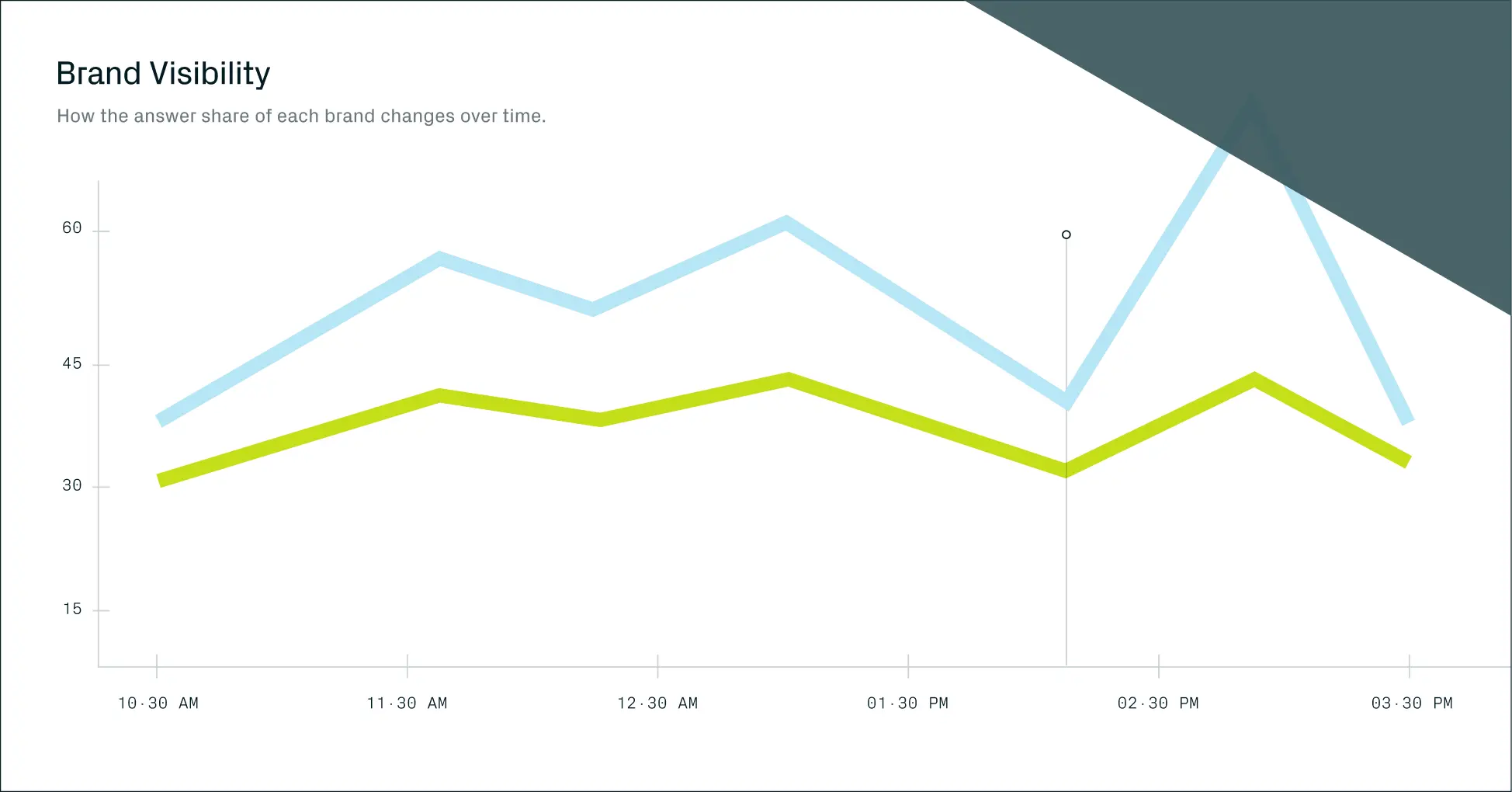
Gauge tracks brand mentions and citation rates across ChatGPT, Perplexity, Gemini, and more, then drives content execution to improve that presence.
Most teams use both: Ahrefs for traditional search, Gauge for the AI search layer on top of it.
Ahrefs is one of the strongest SEO platforms available, with deep keyword, backlink, and rank tracking capabilities.
It is not, however, designed to connect SEO data to AI visibility strategy.
Gauge is built specifically for that bridge: the Ask Gauge agent pulls in GSC, GA4, Semrush, and ad data alongside AI brand mention and citation tracking, so teams can see how their traditional search performance relates to their AI answer presence and act on both in the same workflow.
The two tools work well together, with Ahrefs covering traditional SEO and Gauge covering the AI visibility layer on top.
Ahrefs is a mature, well-documented platform that SEO professionals know well.
Its depth is also its learning curve: getting full value requires familiarity with a broad feature set built around traditional search.
Gauge is purpose-built for AI visibility with a narrower, more guided workflow.
The Ask Gauge agent handles the analytical heavy lifting, walking teams through what the data means and what to do about it.
For teams adding AI search to their stack for the first time, Gauge is the faster platform to get productive in.
Gauge is not a replacement for Ahrefs or Semrush.
It measures something those tools cannot: whether AI platforms are mentioning and citing a brand in their generated answers.
A brand can rank #1 on Google and still be completely invisible in AI search.
Gauge fills that gap, and the Ask Gauge agent integrates GSC, GA4, and Ahrefs data alongside AI visibility data for unified analysis across all search channels.