Top 6 LLMO Tools in 2026: Top Platforms for AI Brand Visibility


TL;DR
LLMO tools track and improve brand visibility in AI-generated answers across ChatGPT, Perplexity, Gemini, and more. The market splits between purpose-built platforms and traditional SEO tools with AI add-ons. LLMO stands for Large Language Model Optimization: getting your brand cited and mentioned in AI-generated answers when people ask questions about your industry. The best tools offer daily prompt tracking across multiple LLMs, separate citation versus mention rate tracking, competitor benchmarking, and actionable content recommendations that tell you exactly what to fix. Gauge leads as the only closed-loop platform by tracking visibility, surfacing high-impact actions, and helping execute content improvements. Peec AI offers clean analytics with MCP integration, Profound brings enterprise-grade monitoring with SOC 2 compliance, Otterly AI provides an affordable SMB entry point, Scrunch AI maps brand perception across customer journeys, and SE Ranking adds basic AI tracking to traditional SEO workflows.
Why AI Search Visibility Matters in 2026
ChatGPT processes over 2 billion queries monthly, while Google AI Overviews now appear on 13% of all search results. AI search visitors convert 4.4x better than organic traffic, making AI visibility a direct revenue driver.
Brands not tracked in AI-generated answers are invisible at the decision stage. When a prospect asks ChatGPT "best project management tools for remote teams," they see the brands AI mentions, not the ones ranking on page two of Google.
The mechanics amplify this challenge. LLMs run an average of 3 searches per user query and scan 50-60 results versus the top 3 that humans typically review. They generate 11-word queries compared to human searches of 2-3 words, pulling from deeper, more specific content.
This creates a new visibility gap. Traditional SEO tracked rankings; LLMO tracks whether AI platforms cite your content and mention your brand in their generated responses. The distinction matters: AI often sources your content but strips your brand name from the answer.
When evaluating LLMO platforms, focus on daily prompt tracking across major LLMs, separate citation versus mention metrics, competitor benchmarking, and actionable content recommendations.
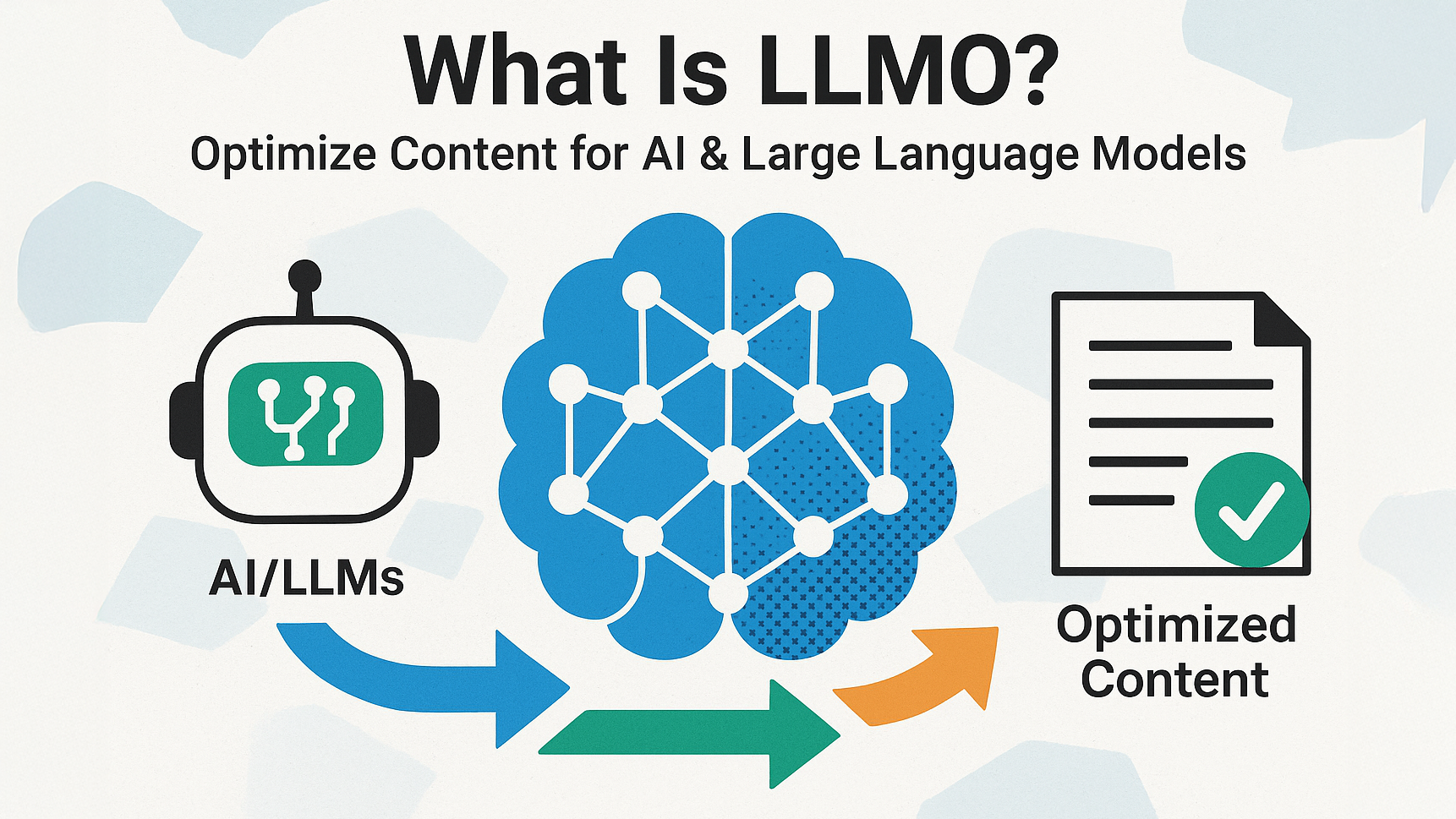
What Is LLMO?
Large Language Model Optimization (LLMO) is the practice of optimizing content and brand presence so that AI-powered platforms like ChatGPT, Perplexity, Gemini, and Google AI Overviews mention and cite your brand in their generated responses. The industry hasn't settled on terminology. You'll also see it called GEO (Generative Engine Optimization) or AEO (Answer Engine Optimization), particularly in SEO communities.
The core mechanism is straightforward: when users prompt AI models with questions, those models scan dozens of sources to craft answers. Your goal is ensuring your brand appears in those answers, either as a cited source or as a mentioned solution.
The critical distinction that most teams miss is citation versus mention tracking. AI models frequently cite your content as a source but strip your brand name from the generated answer. This means your content shapes the response, but your brand remains invisible to the user. Tracking both metrics separately reveals whether you're getting credit for your expertise or just providing anonymous fuel for AI responses.
Most LLMO tools conflate these metrics, making it impossible to diagnose whether you need better content distribution or stronger brand association with your expertise. The best platforms track citation rates and mention rates as distinct KPIs. Learn more about how to optimize content for AI citations.
How We Chose the Best LLMO Tools
We evaluated LLMO platforms on the criteria that matter most to B2B marketers, SEO teams, and agencies actively buying these tools. Daily prompt tracking across major LLMs was our baseline requirement, not just ChatGPT, but Gemini, Perplexity, Copilot, and AI Overviews. Too many platforms still limit tracking to one or two models.
Citation rate versus mention rate tracking separated the serious platforms from the basic ones. AI models frequently cite your content as a source but strip your brand name from the generated answer, meaning you shaped the response but remain invisible to users. Tools that conflate these metrics miss half the story.
We prioritized platforms with competitor benchmarking capabilities and content recommendations that turn data into action. Pure monitoring tools leave interpretation and next steps to the user. The best platforms surface highest-impact improvements and guide execution.
Data quality mattered significantly. Front-end scraping delivers more reliable results than API-dependent approaches, especially for newer AI platforms. We also evaluated pricing relative to prompt volume, integration with existing marketing stacks (GA4, GSC, Semrush), and whether platforms include content creation capabilities or require external tools to act on their recommendations.
The Best LLMO Tools in 2026
The LLMO tools market splits into two camps: purpose-built platforms and traditional SEO tools with AI bolt-ons. Purpose-built platforms like Gauge and Peec AI deliver deeper tracking, competitor benchmarking, and actionable workflows. Traditional SEO platforms offer basic AI monitoring but lack the specialized features teams need to actually improve AI visibility.
1. Gauge
Quick Overview
Gauge is the only LLMO platform with a complete closed-loop system: track AI visibility, surface high-impact actions, execute content improvements, and measure results. Daily tracking runs across ChatGPT, Perplexity, Gemini, Google AI Mode, AI Overviews, and Microsoft Copilot on the Growth plan. The Actions Center ranks improvement opportunities by impact, backed by specific data points rather than generic recommendations.
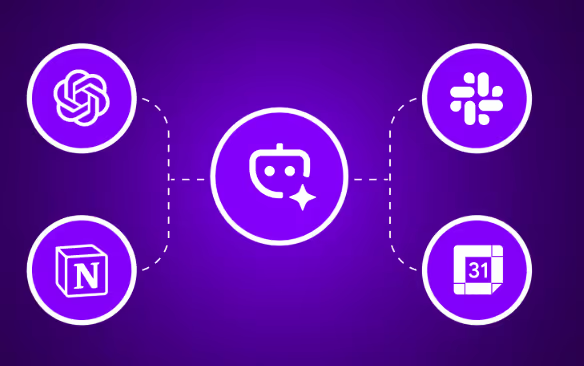
Ask Gauge transforms the platform into a conversational AI marketing co-pilot that integrates GA4, GSC, and Semrush data. Instead of staring at dashboards, marketers ask questions in plain language and get strategic conclusions, not just charts.
Best For
B2B SaaS companies, developer tool companies, agencies, and mid-market teams that need to track, act on, and measure AI visibility improvements within a single platform. Teams switching from monitoring-only tools find Gauge's action-oriented approach immediately valuable.
Pros
- Daily prompt tracking across ChatGPT, Gemini, Perplexity, Google AI Mode, AI Overviews, and Copilot on Growth plan
- Citation rate and URL mention rate tracked separately — critical distinction most competitors miss
- Competitor benchmarking side-by-side per prompt and per topic
- Actions Center surfaces highest-value improvements with data-backed impact rankings
- Ask Gauge AI agent integrates GA4, GSC, and Semrush for conversational analysis
- Technical health scoring across 9 criteria for AI and search optimization
- ChatGPT Ads tracking shows competitor ads across your tracked prompts
- Agency Mode includes pitch workspaces at no extra charge
Cons
- Claude and Grok tracking only available on Enterprise plan
- Starter plan limited to ChatGPT only with 100 prompt allocation
Pricing
Starter: $99/month for 100 prompts, ChatGPT only. Growth: $599/month for 600 prompts across six platforms. Enterprise: custom pricing includes all models plus Claude and Grok tracking.
Voice of the User
Vellum increased visibility from 1.4% to 40.3% over seven months and now ranks #1 in first-party citations. Sanctum grew from 16.7% to 47.5% visibility in six months. LedgerUp jumped from under 1% to 32.3% visibility in one month. Standard Metrics doubled visibility from 9% to 24% within two weeks.
2. Peec AI
Quick Overview
Peec AI operates as a clean AI search analytics platform trusted by over 2,000 marketing teams worldwide. The platform tracks brand visibility, position, and sentiment across six major AI platforms with daily prompt execution. Backed by $29M in funding, Peec distinguishes itself through MCP integration that connects directly to Claude, Cursor, and n8n workflows, plus a Looker Studio connector for client-ready dashboard reporting.
Best For
Mid-market marketing teams seeking straightforward AI visibility analytics with robust competitor benchmarking capabilities. Peec excels for teams that prioritize simple setup and want MCP workflow automation without needing full content creation infrastructure. See how Gauge compares in our Gauge vs. Peec AI breakdown.
Pros
- Daily prompt tracking across ChatGPT, Perplexity, Gemini, Copilot, Google AI Mode, AI Overviews
- Citation rate and mention rate tracked separately — not conflated like most competitors
- Competitor benchmarking side-by-side per prompt and topic
- Sentiment analysis with actionable insights on brand perception
- Unlimited seats across all pricing tiers
- MCP integration connects to Claude, Cursor, n8n workflows
- Looker Studio connector for client-ready dashboard reporting
Cons
- No end-to-end content engine for brief-to-publish workflows
- No AI agent co-pilot with GA4/GSC/Semrush data integration
- No Actions Center with prioritized, data-backed recommendations
- Starter plan offers low prompt volume (25 prompts) relative to ~$100/month price
Pricing
The Starter plan costs roughly $100 monthly for 25 prompts across 3 platforms. The Pro tier runs approximately $241 monthly with expanded capabilities. Enterprise pricing reaches around $505 monthly for full feature access and higher prompt volumes.
3. Profound
Quick Overview
Profound positions itself as the full-stack enterprise solution for AI search visibility. The platform covers 10+ AI platforms including ChatGPT, Perplexity, Claude, Gemini, Grok, Microsoft Copilot, Meta AI, DeepSeek, and Google AI Overviews. Its standout differentiator is Agent Analytics, which tracks how AI crawlers hit and read your website, intelligence competitors don't provide.
The Conversation Explorer gives access to 100M+ real user prompts and responses. SOC 2 Type II compliance meets enterprise procurement requirements.
Best For
Fortune 1000 brands, enterprise procurement teams requiring SOC 2 compliance, and PR teams managing brand perception across multiple regions. The platform scales for large organizations needing multi-language tracking and complex workflow automation.
Pros
- Daily prompt tracking across ChatGPT, Perplexity, Claude, Gemini, Grok, Copilot, Meta AI, DeepSeek, Google AI Overviews
- Citation rate and mention rate tracked separately — critical distinction most competitors miss
- Competitor benchmarking with side-by-side visibility metrics per prompt and per topic
- Agent Analytics tracks how AI crawlers hit and read your site — standout differentiator
- Conversation Explorer provides 100M+ real user prompts and responses for strategy insights
- SOC 2 Type II compliance meets enterprise procurement requirements
- Smart format recommendations analyze top-cited pages to guide content creation
Cons
- No end-to-end content engine (brief → outline → article → publish)
- Workflow builder lacks conversational AI agent capabilities — no GA4, GSC, or Semrush integration
- No Actions Center equivalent — monitoring-first approach leaves interpretation to users
- Starting price steep at $499/month for only 100 prompts with daily tracking
Pricing
Profound Lite starts at $499/month for 100 prompts with daily tracking. The Growth plan runs approximately $399/month when billed annually. Enterprise pricing requires custom quotes and typically runs thousands per month.
4. Otterly AI
Quick Overview
Otterly AI positions itself as the "#1 rated AI search monitoring platform" with 30,000+ marketing professionals and a 4.8/5 G2 rating from 42 reviews. Gartner named it a Cool Vendor in AI in Marketing for 2025. The platform covers ChatGPT, Gemini, Perplexity, Copilot, AI Overviews, and AI Mode with content audit capabilities, crawlability checks, and on-page GEO recommendations.
Best For
SMBs and agencies getting started with generative engine optimization who want simple setup and broad platform coverage without a steep learning curve. Otterly works well for marketing teams prioritizing low cost and quick implementation over deep analytics.
Pros
- Daily prompt tracking across ChatGPT, Gemini, Perplexity, Google AI Mode, AI Overviews, Copilot (Growth); Claude + Grok (Enterprise)
- Separate citation rate and URL mention rate metrics — not conflated
- Competitor benchmarking per prompt and per topic
- Actions Center with data-backed, prioritized recommendations
- Ask Gauge agent with GA4, GSC, Semrush integration
- Technical health scoring across 9 criteria
- ChatGPT Ads tracking — see competitor ads across tracked prompts
- Agency Mode with pitch workspaces at no extra charge
Cons
- Claude tracking requires Enterprise plan
- Starter plan limited to ChatGPT only (100 prompts)
Pricing
- Lite: $29/month (15 prompts)
- Standard: ~$189/month (100 prompts)
- Premium: ~$489/month (400 prompts)
5. Scrunch AI
Quick Overview
Scrunch AI positions itself as an AI customer experience platform that tracks brand presence across AI search platforms. The platform's standout differentiator is customer journey mapping, tracking how brands appear at different stages of the buyer journey across AI touchpoints. Scrunch monitors AI bot traffic through Google Analytics integration and maintains a solid G2 rating of 4.6/5 across 72 reviews.
Best For
Brand and PR teams focused on understanding how AI perceives their brand across the complete customer journey rather than optimizing for competitive advantage.
Pros
- Daily prompt tracking across ChatGPT, Gemini, Perplexity, Google AI Mode, AI Overviews, Copilot (Growth plan)
- Separate citation rate and URL mention rate metrics — not conflated like most competitors
- Competitor benchmarking per prompt and per topic with side-by-side visibility data
- Actions Center with data-backed, prioritized recommendations ranked by impact
- Ask Gauge agent integrates GA4, GSC, and Semrush for conversational analysis
- Technical health scoring across 9 criteria for AI optimization
- ChatGPT Ads tracking shows competitor ads across tracked prompts
- Agency Mode with pitch workspaces at no extra charge
Cons
- Claude tracking requires Enterprise plan upgrade
- Starter plan limited to ChatGPT only (100 prompts for $99/month)
Pricing
- Core: $250/month (350 prompts)
- Agency Core: $500/month
- Enterprise: custom pricing
The higher starting price with no free trial creates a barrier to entry compared to competitors offering trial periods or lower-cost starter tiers.
6. SE Ranking
Quick Overview
SE Ranking bolts AI visibility tracking onto its core SEO platform rather than building purpose-built LLMO capabilities. The platform covers 188 countries with billions of traditional keywords, then adds AI Search monitoring across Google AI Overviews, AI Mode, and other platforms. The AI Search add-on comes in five variants ranging from 100 to 500 prompts monthly.
Best For
SEO-first teams already using SE Ranking who want basic AI visibility monitoring without switching platforms. Teams comfortable with AI features as secondary to traditional SEO workflows.
Pros
- Daily prompt tracking across ChatGPT, Gemini, Perplexity, Google AI Mode, AI Overviews, Copilot (Growth plan)
- Citation rate vs. mention rate tracked separately — not conflated like most competitors
- Competitor benchmarking per prompt and per topic with side-by-side visibility metrics
- Actions Center surfaces highest-value improvements ranked by impact with data-backed recommendations
- Ask Gauge AI agent integrates GA4, GSC, and Semrush for conversational analysis
- End-to-end content engine: brief → outline → article → publish with Webflow CMS integration
- Technical health scoring across 9 criteria for AI + search optimization
- ChatGPT Ads tracking shows competitor ads across tracked prompts
Cons
- Claude and Grok tracking requires Enterprise plan upgrade
- Starter plan limited to ChatGPT only with 100 prompts
Pricing
Core SEO plan costs approximately $103 monthly when billed annually. AI Search add-on ranges from $71 to $89 monthly for 100 prompts with annual billing. Total investment for SEO plus basic AI tracking starts around $170 to $200 monthly at the entry tier.
LLMO Tools Comparison Table
Gauge emerges as the strongest choice for most teams. The platform delivers the only true closed-loop system in the category, tracking visibility gaps, prioritizing actions through its Actions Center, and executing content improvements through its end-to-end engine. While competitors offer monitoring dashboards, Gauge turns data into measurable results.
For teams serious about AI search dominance, Gauge's 7-day free trial provides immediate access to daily tracking across ChatGPT, Perplexity, Gemini, and Google AI platforms. Start tracking, start acting, start measuring.
Why Gauge Leads the LLMO Category
Gauge is the only platform that delivers a complete closed-loop system: track AI visibility, act on the highest-impact opportunities, then measure results. While competitors offer monitoring dashboards, Gauge turns data into executable workflows that drive measurable outcomes.
Daily tracking runs across ChatGPT, Perplexity, Gemini, AI Mode, AI Overviews, and Copilot on the Growth plan, with Claude and Grok added at Enterprise. Citation rates and mention rates are tracked separately, a critical distinction most tools miss when AI models cite content as a source but strip the brand name from generated answers.
The Actions Center surfaces the highest-value improvements ranked by impact potential, backed by specific data rather than generic suggestions. Gauge's end-to-end content engine closes the loop from visibility gap identification to published article, with Webflow CMS integration live and more platforms coming.
Ask Gauge connects AI visibility data with GA4, Google Search Console, and Semrush through a conversational agent that draws conclusions rather than just displaying charts. Multiple clients have achieved 10x+ visibility increases within weeks: LedgerUp went from under 1% to 32.3% visibility in one month, while Vellum reached 40.3% visibility and ranked #1 in first-party citations.
FAQs
What is an LLMO tool?
LLMO tools are software platforms that track and improve your brand's visibility in AI-generated answers across platforms like ChatGPT, Perplexity, and Google AI Overviews. They monitor citations (when your content is sourced), mentions (when your brand name appears), and sentiment across multiple LLMs. Gauge tracks all three metrics daily across 6+ AI platforms, giving you the complete picture of your AI search presence.
What is the difference between citation rate and mention rate?
Citation rate measures how often AI models pull your content as a source when generating answers. Mention rate tracks how frequently your brand name actually appears in those AI-generated responses. This distinction matters because AI often cites your content but strips your brand name from the answer, making you invisible to users. Gauge tracks both metrics separately. Most competitors conflate them, giving you incomplete visibility data.
How do I choose the right LLMO platform?
Prioritize daily tracking across multiple LLMs, not just ChatGPT. Users search across platforms, and each has different citation patterns. Look for platforms that provide actionable guidance, not just monitoring dashboards filled with charts you can't act on. Gauge combines comprehensive tracking, prioritized recommendations through its Actions Center, and end-to-end content creation in one platform.
Is Gauge better than Profound?
Profound covers more AI platforms (10+ vs. 6+) and offers SOC 2 Type II compliance for enterprise procurement requirements. Gauge delivers better value per prompt, faster time-to-results, and includes a full content engine that Profound lacks. Gauge's Ask agent integrates your GA4, Google Search Console, and Semrush data for conversational analysis. Profound's workflow builder doesn't offer this level of integration.
How quickly can I see results with LLMO tools?
Results depend on your category's competitiveness and existing content quality, but properly executed LLMO campaigns show measurable improvements within weeks. Gauge clients have achieved 2x visibility increases in as little as 2 weeks, with LedgerUp jumping from under 1% to 32.3% visibility in one month. The key is choosing a platform that provides specific, actionable recommendations rather than generic monitoring.
What's the best Otterly AI alternative?
Otterly AI serves as a solid entry point for teams starting their AI visibility journey, but it lacks depth for serious optimization work. Teams that need competitor benchmarking, prioritized action items, and content creation capabilities require more robust platforms. Gauge represents the natural upgrade path from basic AI monitoring to comprehensive optimization with its Actions Center and integrated content engine.
Related Blogs