10 Best AI Visibility Tools for AI SEO in 2026


TLDR - AI search is reshaping how customers discover brands.
58% of consumers have replaced traditional search engines with Gen AI tools for product and service recommendations. If your brand doesn't appear in ChatGPT responses or Perplexity answers, you're losing customers to competitors who do. Traditional SEO tracked rankings on a single page of results. AI search demands a different approach: measuring citation rates, mention frequency, and share of voice across multiple platforms.
We spent several weeks testing 10 AI visibility platforms to answer one question: which tools deliver real impact? Some expensive enterprise platforms delivered complex dashboards with shallow insights. Others with modest pricing provided real impact.
Gauge delivers the complete toolkit: monitoring, citations, and content recommendations that drive 3x-5x visibility uplift within 30 days. The best platforms blend tracking depth with implementation speed, turning passive metrics into actionable growth.
What Is AI Visibility and How Do You Measure It?
Definition
AI visibility measures how often your brand appears across ChatGPT, Perplexity, Claude, Gemini, and other answer engines. When someone asks these platforms for product recommendations or vendor comparisons, is your company in the answer? Does the AI cite your website as a source?
Two terms describe this practice: Answer Engine Optimization (AEO) and Generative Engine Optimization (GEO). They're functionally synonyms, both describing the practice of optimizing content for inclusion in AI-generated answers.
Three metrics matter most: citation rate (how often AI systems link to your content), mention rate (how frequently your brand appears in responses), and share of voice (your visibility compared to competitors for relevant prompts). Ethan wrote a great article on the key metrics to track here.
The AI Search Landscape (2026)
Gartner predicts a 25% decline in traditional search volume by 2026. That traffic isn't disappearing; it's moving to AI platforms. Up to 90% of B2B buyers now use AI tools like ChatGPT to research vendors before contacting sales teams.
Multi-platform tracking has become essential. Your prospects are actively testing and moving beyond ChatGPT. They switch between AI Overviews in Google, Perplexity for research queries, Claude for analysis, and Gemini for quick answers. Enterprise engagements with Microsoft CoPilot lead to further fractured user behavior. Each platform interprets sources differently and surfaces different brands for identical questions.
The 10 Best AI Visibility Tools in 2026
1. Gauge

Quick Overview
Gauge offers the only complete GEO toolkit that combines monitoring, analytics, content recommendations, and audit capabilities in one platform. The system tracks 7+ AI platforms including ChatGPT, Claude, Gemini, Perplexity, CoPilot, AI Mode, and AI Overviews.
What sets Gauge apart: the team built real web experience monitoring that pulls data from actual user interfaces, not just API calls. This technical approach captures what AI platforms actually show users, which differs significantly from sanitized API responses.
Gauge also has in-depth content and agent tools to own the workflow that actually matters. What do you do with all of the tracking and visibility data? Gauge's agentic marketer enables you to actually make sense of the noise. The content generation tooling helps you actually do the work to show up in more AI answers.
Best For
Brands needing end-to-end workflow from tracking to execution, especially teams selling to AI-native audiences who require real search intent research beyond generic "best X" queries.
Pros
- Six-platform coverage monitors ChatGPT, Gemini, Perplexity, CoPilot, AI Mode, and AI Overviews in a single dashboard, eliminating the need to cobble together multiple tools.
- Actionable content recommendations provide both onsite and offsite strategies, not just passive metrics about where you're falling short.
- GA4 integration tracks real AI referral traffic to your properties, connecting visibility metrics to actual business outcomes and revenue.
- GSC integration enables your Gauge agent to cross-reference real search data and clicks.
- API and BI tool access lets enterprise teams integrate Gauge data into existing BI workflows and data lakes for custom analysis.
- Real search intent research maps competitor web presences across actual use cases and pain points rather than manufactured "best software for X" queries.
- Query Fan-out tracking enables deeper insights into how AI models actually search the web.
- Proven results show typical customers achieve 3x-5x visibility uplift within the first month of implementing recommendations.
Cons
- Results depend on implementing recommendations actively, not passive tracking alone, which requires dedicated resources beyond the platform subscription.
Pricing
- Starter: $99/month (ChatGPT only, 100 prompts)
- Growth: $599/month (600 prompts, 6 platforms)
- Enterprise: Custom pricing (10+ platforms, full feature access, API, S3 integration)
Voice of the User
Teams appreciate Gauge's "engineering over marketing" approach. The platform focuses on real search intent rather than vanity metrics, which resonates with technical teams.
2. HubSpot AEO
Quick Overview
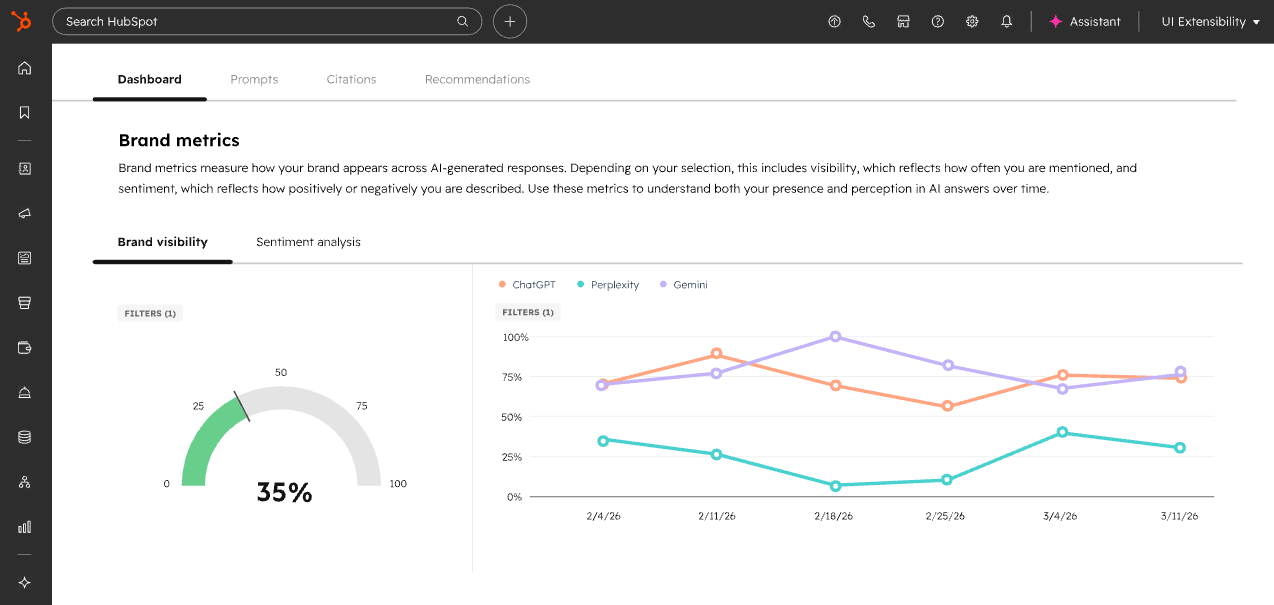
HubSpot AEO focuses on helping teams track and improve how their brand appears across AI answer engines like ChatGPT, Gemini, and Perplexity. Rather than positioning itself as a purely data-heavy monitoring tool, it combines visibility tracking with actionable recommendations.
Best For
Marketing teams and mid-market brands looking for a practical way to monitor AI visibility and improve it through content and campaign execution, especially those already using HubSpot.
Pros
- Combines AI visibility tracking with actionable content recommendations
- Connects directly with HubSpot’s CRM and marketing tools for execution
- Helps teams identify content gaps and improve inclusion in AI-generated answers
Cons
- Covers fewer AI platforms than some enterprise-focused tools
- Less suited for organizations needing advanced compliance or highly technical analytics
Pricing
- Starter: $45/month
- Growth: Available through HubSpot Marketing Hub
Enterprise: Custom pricing
3. Profound
Quick Overview
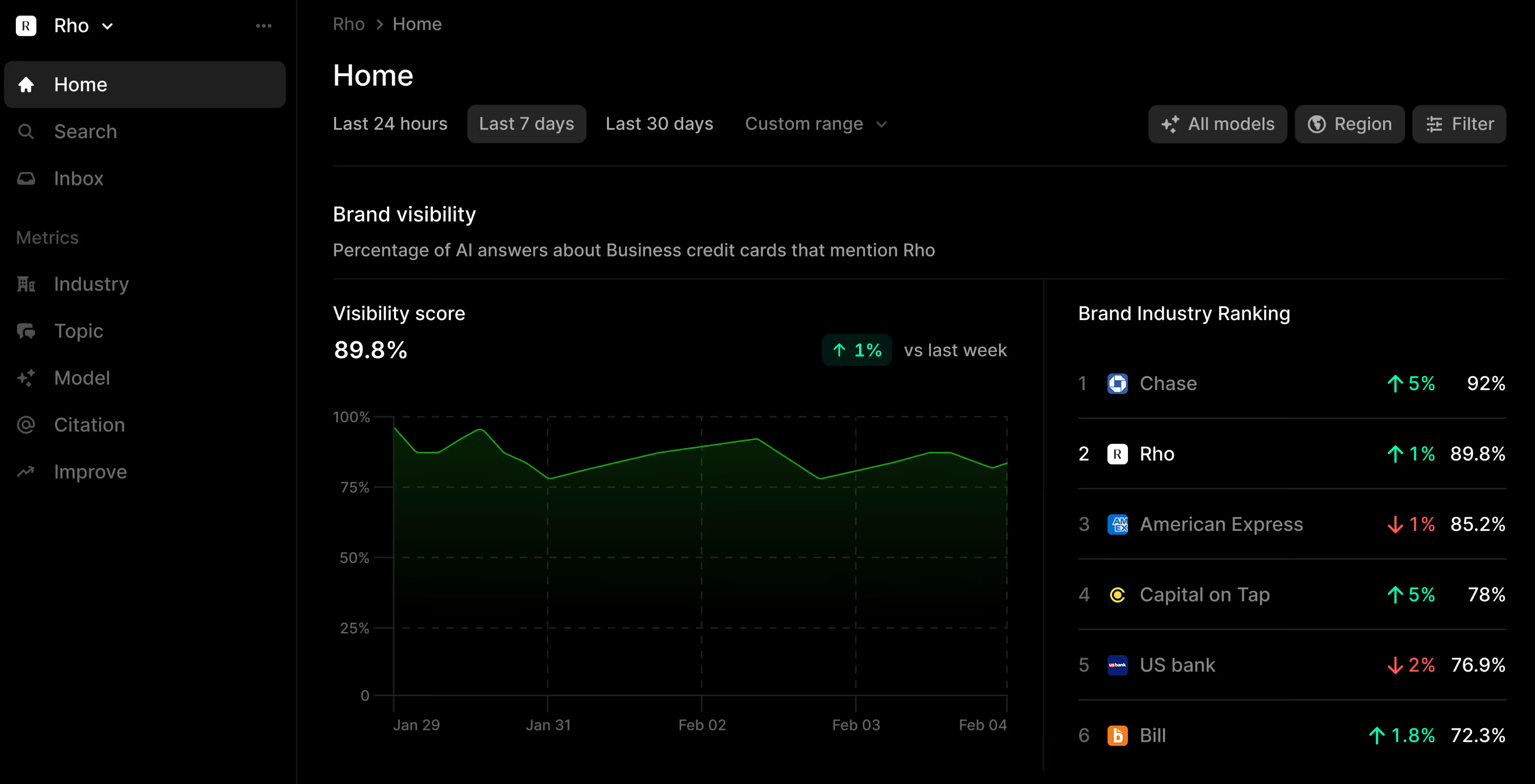
Profound positions itself as the enterprise-grade monitoring solution with SOC 2 Type II compliance. The platform tracks 10+ AI engines including DeepSeek and Meta AI, making it one of the most comprehensive options for platform coverage.
Best For
Brands requiring enterprise compliance and security certifications for procurement approval.
Pros
- Case studies include Ramp increasing AI visibility 7x in Accounts Payable, moving from 19th to 8th place among fintech brands in the sector.
- Strong market presence through initiatives like the Zero Click Search conference, establishing thought leadership in the AEO space.
- Enterprise security features include SOC 2 Type II compliance and SSO support for organizations with strict data governance requirements.
Cons
- Limited platform access on the Lite plan ($499/month) provides only 100 prompts, with Growth and full 10+ engine access requiring custom Enterprise pricing.
- Monitoring-focused approach provides data-heavy analytics but lacks the execution suite for content creation and optimization, requiring separate tools for implementation.
- Steep learning curve with users describing the interface as "unintuitive" and overwhelming without a dedicated CSM to interpret the data.
- Upsell pressure toward very expensive Enterprise plans limits the value of lower-tier subscriptions for mid-market companies.
Pricing
- Lite: $499/month (100 prompts)
- Growth: Custom pricing
- Enterprise: Custom pricing (10+ platforms, full feature access)\
4. Evertune

Quick Overview
Evertune serves Fortune 500 clients including Athena Health, Miro, Roku, and Virgin Voyages. Their EverPanel integrates AI consumer app data with panel research, while Partner Connect facilitates content distribution partnerships.
Best For
Fortune 500 marketing teams needing white-glove strategic support and multi-stakeholder coordination.
Pros
- Comprehensive platform coverage monitors ChatGPT, AI Overviews, Gemini, Claude, Perplexity, Meta, DeepSeek, and Copilot simultaneously.
- Product attribute mapping shows which specific features drive AI recommendations in your category, enabling targeted optimization.
- Source influence analysis identifies strategic partnership opportunities by revealing which publications most influence AI perceptions of your brand.
Cons
- No public pricing creates evaluation friction since teams must book demos before understanding cost implications.
- Enterprise focus limits accessibility for startups and SMBs who need AI visibility tools but can't justify Fortune 500-level budgets.
Pricing
Contact sales for custom enterprise pricing.
5. Scrunch AI

Quick Overview
Scrunch AI raised $19M in venture funding (including a $15M Series A led by Decibel) to build an Agent Experience Platform that delivers compressed content specifically for AI crawlers. The company serves over 500 brands including Lenovo, SKIMS, and Penn State University.
Best For
Enterprises managing multiple brands across different regions and languages who need SOC 2 Type II compliance.
Pros
- Seven-platform tracking covers ChatGPT, Claude, Perplexity, Meta AI, AI Overviews, AI Mode, and Gemini with comprehensive visibility.
- Agency-specific features include pitch environments for prospecting new clients and referral rewards for partner programs.
Cons
- Prompt counting model means 100 prompts across 5 engines consumes 500 credits, making multi-platform tracking expensive quickly.
- Limited AXP availability since the Agent Experience Platform remains in limited testing rather than broadly available to customers. No curernt evidence that AXP is relevant to AI search.
- Data refresh updates every 3 days as standard, with daily updates only for prompts under 14 days old .
Pricing
- Explorer: $100/month (100 prompts, ChatGPT only)
- Growth: $500/month (700 prompts, all LLMs)
- Enterprise: Custom pricing (multi-brand support, API access, SSO)
6. AthenaHQ
Quick Overview
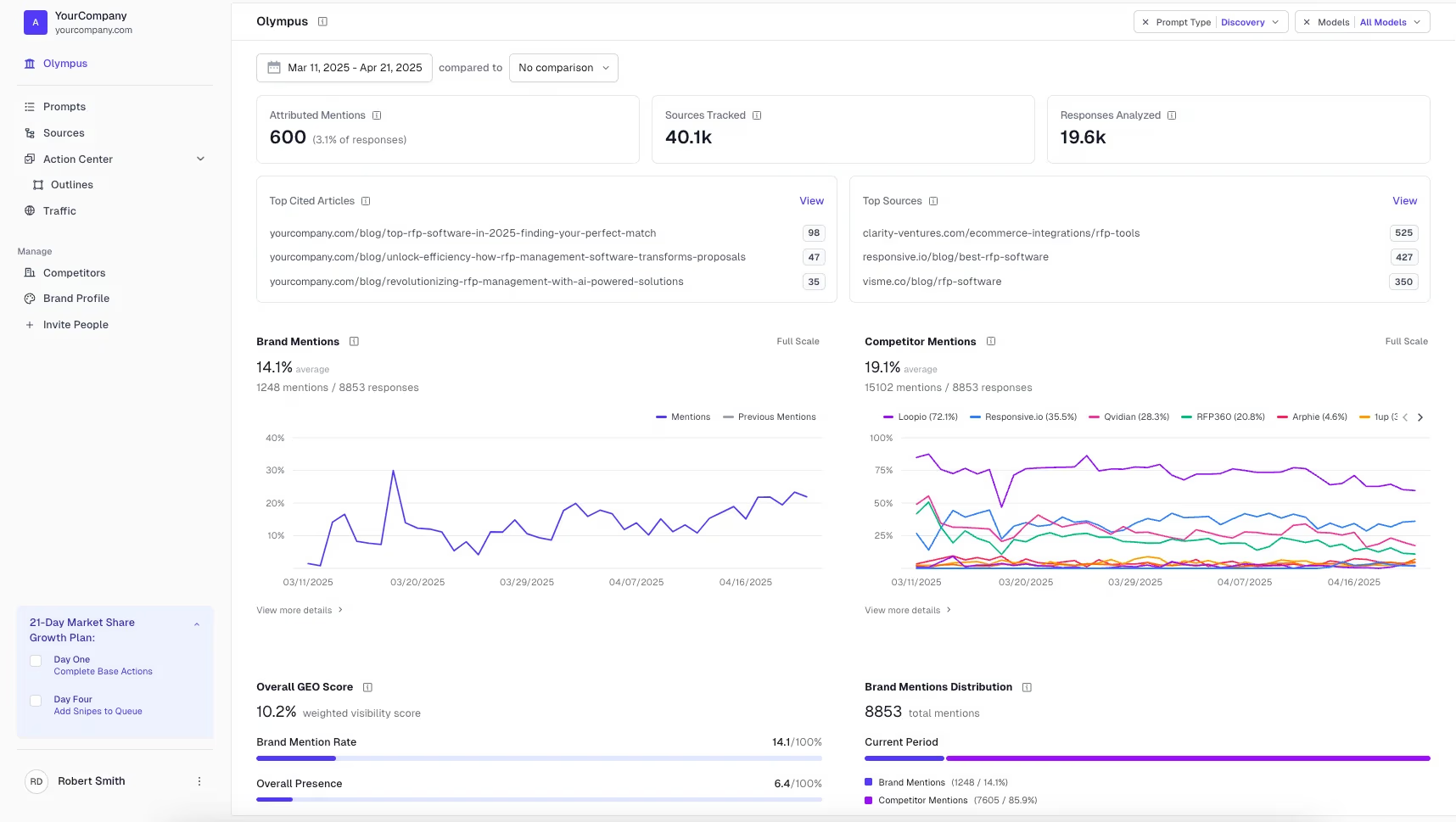
AthenaHQ was founded by former Google Search and DeepMind engineers. Their Query Volume Estimation Model (QVEM) attempts to quantify prompt activity, while the Athena Citation Engine (ACE) does the same citation probability.
Best For
Teams looking for sentiment analysis and revenue attribution through Shopify or GA4 integrations.
Pros
- Case studies show Grüns growing Share of Voice from 2% to 12.6% in 60 days, with Lago achieving 50% more demos from AI search.
- Revenue attribution integrations with Shopify and GA4 correlate AI visibility metrics with actual sales and traffic data.
- Enterprise compliance features include SOC 2 and GDPR certifications for rigorous procurement reviews.
Cons
- Self-serve plan excludes prompt volume data, forcing users to rely on third-party tools or guesswork to determine which prompts are worth targeting.
- Credit system complexity means 3,600 credits deplete quickly, leaving users with only weekly prompt analysis unless they pay significantly more.
- Setup complexity delays time-to-value for organizations needing quick wins rather than multi-month implementation projects.
Pricing
- Self-Serve: $295/month ($95/month annual, 3,600 credits)
- Enterprise: Custom pricing (prompt volume access, ACE, dedicated GEO specialist)
7. Peec AI

Quick Overview
Peec AI raised $21M in Series A funding (led by Singular) to build UI scraping technology that mimics real user interactions with AI platforms. The company emphasizes an opinionated UX designed for rapid workflow completion.
Best For
Marketing teams prioritizing simple, focused interfaces over comprehensive feature sets.
Pros
- Sentiment tracking included without requiring premium tier upgrades, unlike competitors charging €450+ for this feature.
- Rapid ranking results with users reporting blog posts ranking for targeted prompts within 24 hours of implementation.
Cons
- No actionable recommendations since the platform lacks audit functions that provide specific actions to increase visibility.
- Additional fees required for AI models like Gemini, Claude, and AI Mode beyond the base subscription price.
- Limited prompt discovery assumes users have already completed AI search analysis, creating extra work for teams approaching from traditional SEO backgrounds.
Pricing
- Starter: €89/month (growing startups)
- Pro: €199/month (agile SMEs)
- Enterprise: Custom pricing (advanced tracking, reporting)
8. Conductor

Quick Overview
Conductor earned Forrester Leader status and serves clients including Verizon, Microsoft, Adidas, and PayPal. Conductor One unifies AEO, SEO, content creation, and technical monitoring in a single platform with agent-ready architecture.
Best For
Enterprises needing unified AEO/SEO workflows that eliminate tool sprawl across marketing teams.
Pros
- Revenue measurement connects AI visibility to traffic, conversions, and ROI.
- Conductor Creator generates AEO-optimized content from a data engine.
- 24/7 website monitoring alerts teams immediately when technical issues could block AI bot crawlability.
Cons
- Enterprise-only focus excludes startups and small businesses from accessing the platform regardless of need.
- No self-service trial since demo-gated evaluation creates friction for teams wanting to test before committing.
- Platform breadth creates steep learning curves versus focused point solutions, requiring significant onboarding investment.
- Legacy platform architecture and very expensive pricing limit appeal for modern teams.
Pricing
Contact sales for custom enterprise pricing.
9. AirOps
Quick Overview
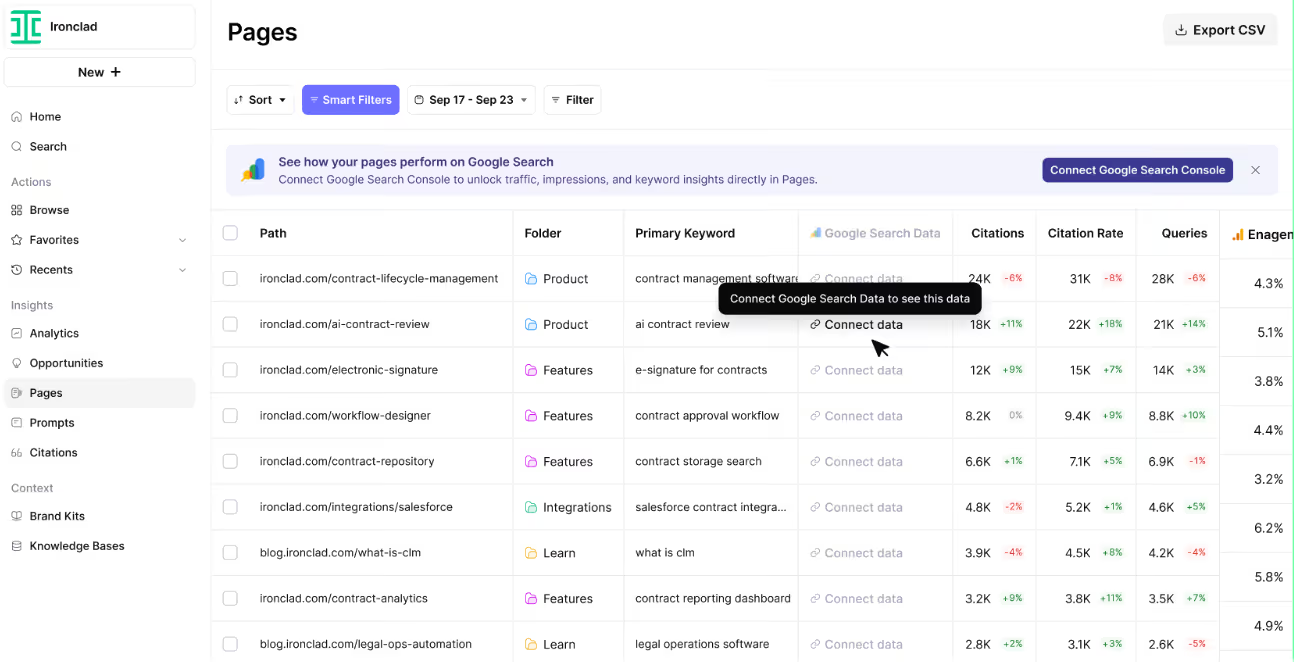
AirOps serves Webflow, Ramp, Carta, and Chime with a platform that unifies measurement and content creation. Page360 combines SEO, AI search, and GA4 data in one view. The company's research shows only 30% of brands maintain visibility across consecutive AI answers.
Best For
Content teams needing integrated measurement and creation workflows rather than separate tools.
Pros
- Integrated content workflows connect insights directly to scalable creation rather than stopping at analytics dashboards.
- Original research reveals that just 20% of brands maintain visibility across 5 consecutive AI responses, demonstrating the value of consistent tracking.
- Unified analytics eliminate data silos by combining SEO, AI search, and GA4 metrics in Page360.
Cons
- Solo plan tracks ChatGPT only, with multi-engine insights requiring the Pro tier at significantly higher cost.
- Task-based billing complicates monthly cost prediction since many workflow steps count as currency with varying rates.
- Steep learning curve for non-technical users building complex workflows, making it less of a "sign up and go" solution.
- AI search tracking feels tacked on to a platform primarily focused on content operations rather than visibility optimization.
Pricing
- Solo: Free (1,000 tasks/month, ChatGPT only)
- Pro: $199/month (75,000 tasks, multi-engine insights)
- Enterprise: Custom pricing (unlimited knowledge bases, dedicated account manager)
10. Semrush AI Visibility Toolkit
Quick Overview
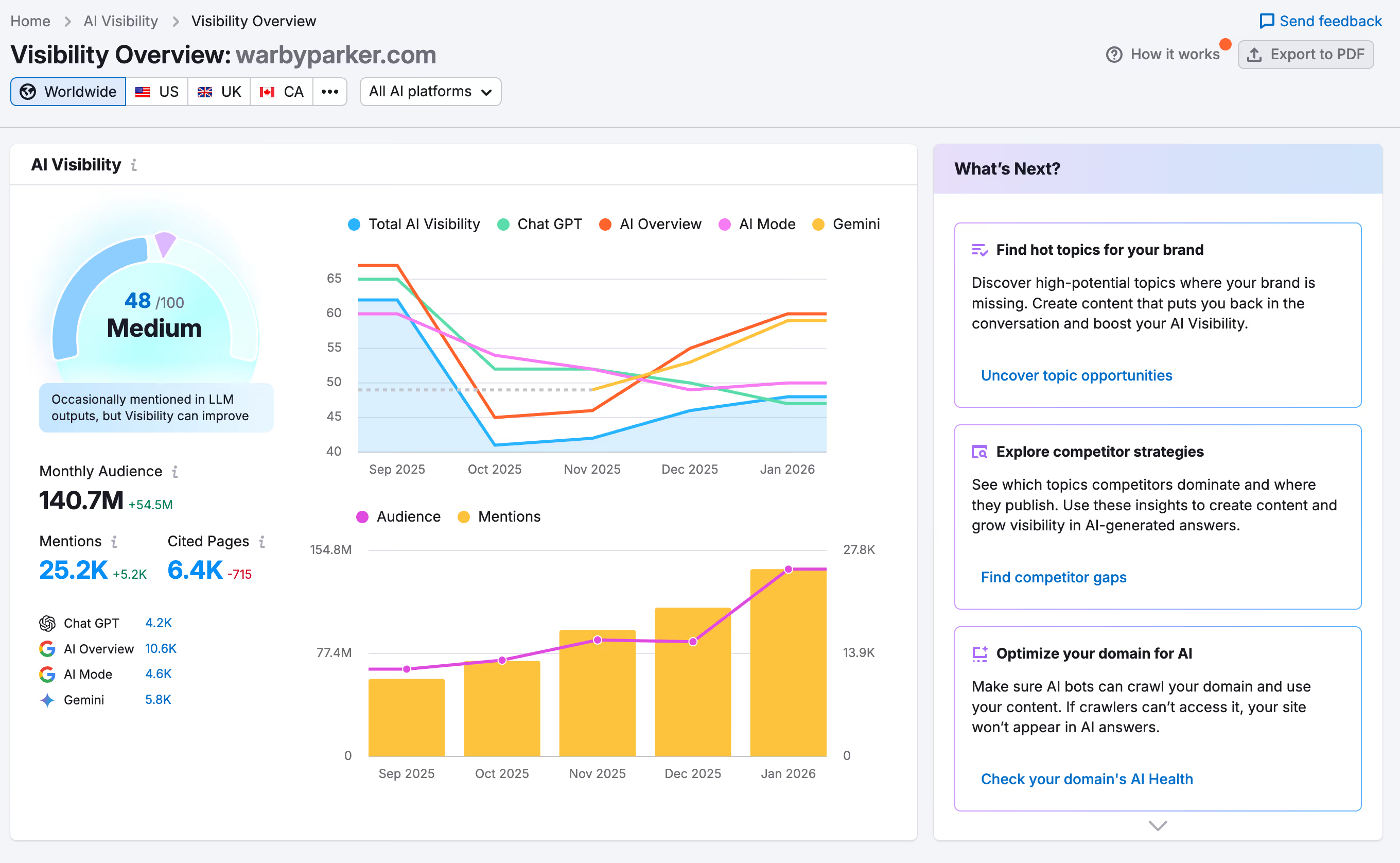
Semrush built a 239M+ prompt database across 8 regions, creating the first unified SEO and AI visibility platform. The toolkit integrates with My Reports for presentation-ready outputs that combine traditional and AI search metrics.
Best For
SEO professionals expanding traditional search workflows into AI visibility.
Pros
- AI Strategic Opportunities groups recommendations by urgency and timeline, helping teams prioritize implementation.
- Prompt database includes 90M+ U.S. prompts and 29M+ ChatGPT-specific prompts for comprehensive coverage.
Cons
- Limited platform coverage excludes Claude, Meta AI, and other emerging platforms that competitors track.
- Regional restrictions limit coverage to US, UK, Canada, Australia, India, and Spain, excluding major markets.
- Shallow analysis lacks citation weight tracking, fan-out query monitoring, and sentiment analysis depth.
Pricing
- AI Visibility Toolkit (Standalone): $99/month per domain
- Semrush One: $199/month Starter, $299/month Pro+, $549/month Advanced
Summary Table
Why Gauge Delivers the Complete AI Visibility Solution
AI search is fundamentally reshaping how customers discover brands. Citations determine which companies enter consideration sets before prospects ever visit a website. Gauge enables you to understand both where you appear and what to do about the gaps.
The platform combines monitoring depth with actionable content recommendations. Real search intent research targets actual pain points your prospects ask about.
GA4 integration join in real AI referral traffic impact on revenue, connecting visibility metrics to outcomes that matter for business decisions.
Technical teams built the platform prioritizing data accuracy over marketing polish. That engineering focus shows in the methodology: pulling real web data from actual user experiences rather than relying solely on API implementations that miss what platforms actually display.
The typical 3x-5x visibility uplift within 30 days demonstrates strong execution focus. Results depend on implementing recommendations, not passive observation. Teams that act on the insights see measurable growth in citations, mentions, and ultimately revenue from AI search channels.
How We Chose the Best AI Visibility Tools
Evaluation Criteria
We evaluated platforms based on multi-platform coverage (ChatGPT, Perplexity, Claude, and Gemini as minimum requirements), citation and mention tracking accuracy with transparent methodology, actionable recommendations versus passive monitoring dashboards, revenue attribution and traffic integration capabilities, enterprise security compliance (SOC 2, GDPR, SSO), pricing transparency and accessibility across business sizes, and user feedback from G2, TrustRadius, and direct testimonials.
Key Tradeoffs
Ease of use versus feature depth creates the most common tension. Peec AI offers simplicity but limited recommendations. Conductor provides comprehensive features but requires significant onboarding. Self-service accessibility versus white-glove enterprise support splits the market between tools like Gauge and Evertune (enterprise only).
Real-time data refresh speed versus prompt volume coverage forces compromises. Monitoring analytics versus integrated content creation workflows determines whether you need multiple tools or one platform.
Research Process
We analyzed official product documentation and pricing pages, reviewed third-party comparisons and user feedback platforms, tested platform claims against stated capabilities and limitations, verified case study results and customer success metrics, and assessed methodology transparency and data collection approaches. The single goal: separate marketing claims from actual capabilities that drive business results.
FAQs
What is AI visibility and why does it matter?
AI visibility measures brand mention frequency across ChatGPT, Perplexity, Claude, Gemini, and other answer engines. It matters because 58% of consumers have replaced traditional search with Gen AI tools for product recommendations. Brands invisible in AI answers lose customers to cited competitors silently, without ever knowing prospects considered alternatives.
How do I choose the right AI visibility tool?
Match platform coverage to your target audience behavior. If your prospects use Perplexity heavily, ensure your tool tracks it. Prioritize actionable recommendations over passive monitoring dashboards that show problems without solutions. Verify pricing transparency and enterprise compliance requirements match your organization's needs.
Is Gauge better than Profound for AI search tracking?
Gauge delivers end-to-end workflow combining tracking with content recommendations and audit capabilities. Profound focuses on enterprise monitoring with data-heavy analytics. Gauge emphasizes execution and impact with 3x-5x uplift claims. Profound emphasizes compliance and observation. Choose Gauge for workflow and results, Profound for monitoring and security certifications.
How does AI visibility relate to traditional SEO?
AI search distributes citations across the top 50 results more evenly than traditional search, which concentrates clicks on positions 1-3. Both disciplines optimize discoverability through different mechanisms. AI visibility lacks public traffic data, making measurement harder. The skills overlap but the tactics differ significantly.
If I'm successful with SEO, should I invest in AEO?
Yes. Gartner predicts 25% traditional search decline by 2026 as traffic shifts to AI platforms. Up to 90% of B2B buyers use AI tools like ChatGPT for vendor research before contacting sales. AI visibility complements SEO rather than replacing it, expanding your discoverability across the channels prospects actually use.
How quickly can I see AI visibility results?
Peec AI users ranked prompts within 24 hours of implementation. Gauge customers report 3x-5x uplift within 30 days. AthenaHQ case studies show 2% to 12.6% Share of Voice growth in 60 days. Speed depends on implementation effort and competitive intensity in your category.
What's the difference between tool tiers (Starter vs Enterprise)?
Starter plans limit AI platforms monitored, offer basic prompt tracking, and provide self-service support. Pro and Growth tiers add multi-engine tracking, competitive intelligence, and team collaboration features. Enterprise plans include custom prompts, API access, SSO, and dedicated support for complex implementations.
Related Blogs

 Expect Higher Visibility on Grok. Lower on Perplexity. A Study of Brand Mentions from 17M+ Answers