Best AI Prompt Tracking Tools in 2026


Introduction
Buyers increasingly bypass Google to search ChatGPT, Perplexity, Gemini, and Google AI Mode when finding products, comparing tools, and making purchase decisions. ChatGPT alone processes over 2 billion queries monthly, with much of that traffic coming from commercial searches that previously went to traditional search engines.
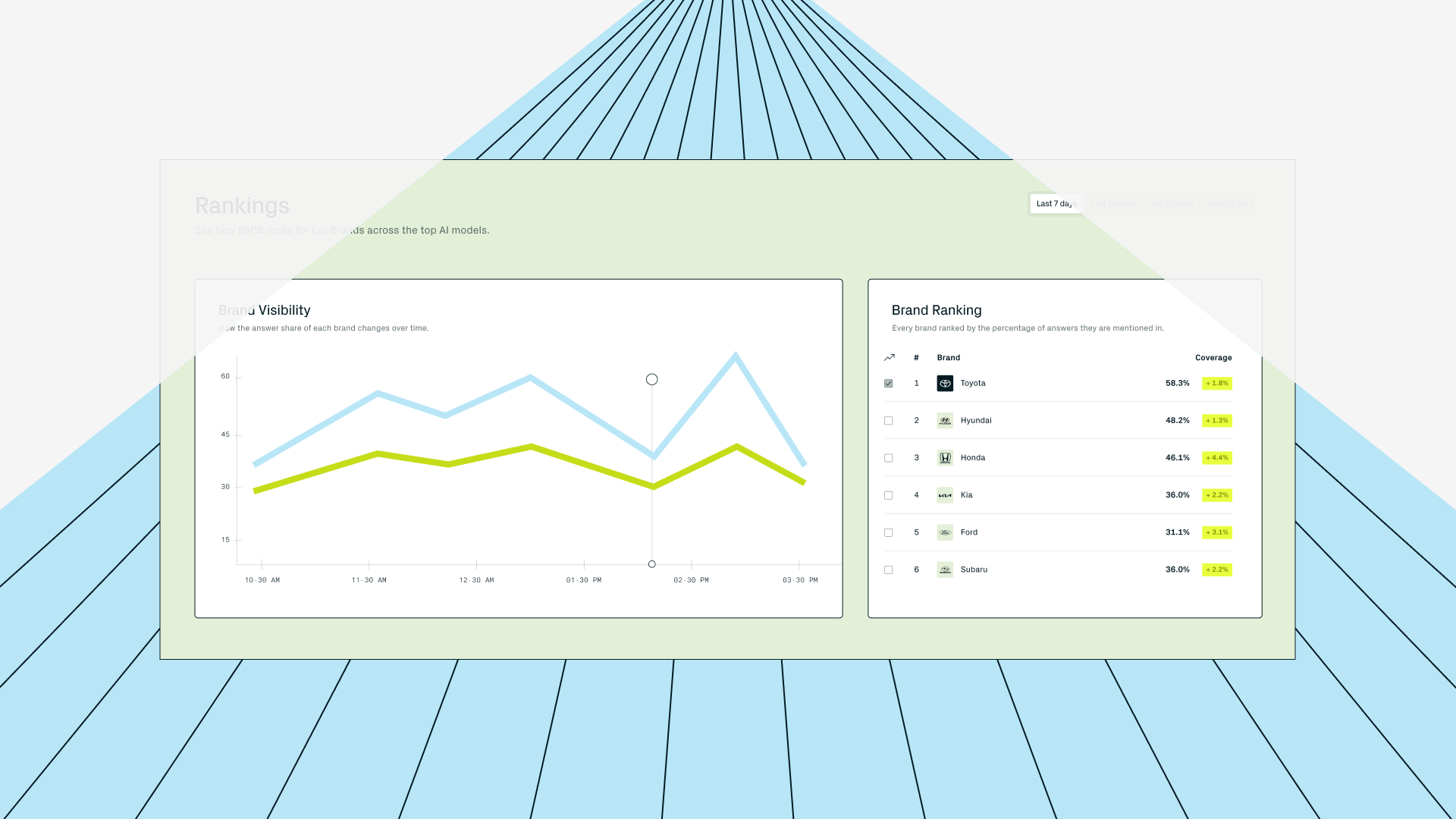
To measure that movement, you need prompt tracking. Prompt tracking means running structured queries daily across AI platforms to monitor where your brand stands in AI-generated answers — tracking visibility rates, citations, and how your brand gets described when buyers ask questions about your category.
AI search remains early-stage territory. The brands building prompt tracking workflows now are establishing baselines and compounding visibility gains while competitors are still figuring out the channel exists.
This article covers the 7 best AI prompt tracking tools in 2026, evaluated on platform coverage, data quality, actionability, and pricing. Gauge is the only platform that connects prompt tracking to content execution and measurable results.
What Is AI Prompt Tracking?
AI prompt tracking runs the same set of queries daily across major AI platforms like ChatGPT, Perplexity, Gemini, and Google AI Overviews. You measure how often your brand appears in responses, which URLs get cited, and how your company is described compared to competitors.
This differs from basic brand monitoring, which catches random mentions across the web. Prompt tracking uses structured, repeatable queries that mirror how your buyers actually search. Instead of tracking sporadic brand mentions, you measure consistent visibility trends for queries like "best project management tools" or "Slack alternatives for remote teams."
The core metrics matter for Generative Engine Optimization: brand visibility rate (percentage of AI answers mentioning your brand), citation rate (how often your content gets pulled as a source), mention rate (how often your brand name appears when cited), and sentiment analysis. AI answers increasingly drive buyer discovery and evaluation, making prompt visibility as critical as search rankings.
How We Evaluated These Tools
Platform coverage determines your monitoring scope. The essential four are ChatGPT, Perplexity, Google AI Overviews, and Gemini, with Microsoft Copilot and Claude adding enterprise value for specific verticals.
Data quality separates professional tools from basic monitors. Front-end scraping captures what real users see in their browsers, while API-based tools often return different data than actual user interfaces display. Monitoring cadence matters for competitive response speed — daily runs catch changes immediately, while weekly or on-demand tracking misses opportunities.
Actionability distinguishes monitoring platforms from strategic tools. Most tools show you data; the best tools tell you what to do about it. Pricing transparency and value per prompt round out our evaluation framework, helping teams choose tools that scale with their growth.
How We Evaluated These Tools
Platform Coverage — ChatGPT, Perplexity, Gemini, Google AI Overviews, Microsoft Copilot, and Claude access across pricing tiers.
Data Quality — Front-end scraping from real chat interfaces vs API access (APIs return different data than users see).
Monitoring Cadence — Daily automated runs vs weekly or on-demand tracking for consistent trend analysis.
Depth — Basic mentions only vs citations + sentiment + competitive positioning + query analysis.
Actionability — Tools that surface specific next steps and recommendations vs dashboards that just display data.
Pricing Transparency — Clear per-prompt costs and feature boundaries vs contact-sales pricing models.
2. Otterly AI
Quick Overview
Otterly AI delivers straightforward AI search monitoring for teams that want daily brand tracking without complexity. The platform covers ChatGPT, Perplexity, Google AI Overviews/AI Mode, Gemini, and Microsoft Copilot through front-end scraping that captures real user-facing results. Otterly excels at the "set prompts → run daily → view trends" workflow that smaller teams need.
Best For
Small teams and solo marketers who want straightforward daily monitoring without needing deep analysis or content execution capabilities.
Pros
The $29/month entry point makes Otterly accessible for budget-conscious teams. Country and location-based tracking lets you monitor regional variations in AI responses. Multi-language support extends monitoring beyond English markets, while built-in AI referral traffic monitoring shows which AI platforms drive actual website visits.
Cons
Otterly stops at monitoring — no closed-loop content execution or strategic recommendations. The platform lacks GA4, GSC, or Semrush integrations that would connect prompt data to broader marketing context. Teams outgrow Otterly when they need analysis and action plans, not just visibility dashboards. See Gauge vs Otterly AI.
Pricing
Plans start at $29/month for basic monitoring features.
3. Profound
Quick Overview
Profound positions itself as an enterprise-focused AI answer intelligence platform designed for Fortune 1000 brands. The tool covers 10+ AI platforms including ChatGPT, Perplexity, Gemini, Claude, and Google AIO. Its standout differentiator is Agent Analytics, which shows which AI crawlers are hitting your site and what content they're reading — valuable intelligence most competitors don't provide.
The platform's Conversation Explorer draws from 100M+ real user prompts for market intelligence. This gives teams insight into actual queries people run, not just the prompts they set up for monitoring.
Best For
Fortune 1000 brands with enterprise compliance requirements who need SOC 2 Type II certification for procurement. Large organizations that value broad platform coverage and can justify the premium pricing for enterprise-grade features.
Pros
Profound offers the broadest platform coverage in the market, including Claude tracking that most competitors lack. Agent Analytics and Smart Format Recommendations are unique differentiators that provide actionable intelligence about AI crawlers and content optimization. The SOC 2 Type II compliance makes it viable for enterprise procurement processes that require certified security standards.
Cons
The $499/mo entry point for just 100 prompts creates a steep price-to-value gap compared to alternatives like Gauge's $99/mo starter tier. Despite the "agent" branding, Profound's agent is actually a no-code workflow builder, not a conversational AI assistant. The platform lacks GA4, GSC, Semrush, or ad data integration in the agent layer, requiring more manual effort to turn monitoring insights into AEO improvements.
Pricing
From $499/mo (Starter, 100 prompts)
4. Peec AI
Quick Overview
Peec AI positions itself as straightforward AI search analytics for marketing teams. The platform tracks Visibility, Position, and Sentiment across ChatGPT, Perplexity, and Google AI Overviews, with add-ons available for broader coverage. Setup is genuinely simple, earning trust from 1,500+ marketing teams who want clean data without complexity.
Best For
Marketing teams running 25–100 daily prompts who prioritize competitive benchmarking over advanced analysis. Peec works well for teams that want reliable tracking data but handle interpretation and action planning internally.
Pros
Simple setup gets you running quickly without technical overhead. Location-based tracking lets you monitor regional variations in AI responses. Competitive benchmarking comes included, showing how your brand performs relative to competitors across tracked queries.
Cons
The simplicity focus becomes a ceiling for advanced users who need deeper analysis. No content execution layer means you identify gaps but must build solutions elsewhere. Peec surfaces data cleanly but leaves interpretation and action planning entirely to the user. See Gauge vs Peec AI.
Pricing
Starter tier begins around €89/month. Pricing scales with prompt volume and platform add-ons, though specific tiers aren't publicly detailed on their site.
5. Scrunch AI
Quick Overview
Scrunch AI takes a different approach than pure prompt tracking — it maps brand perception across the AI-assisted customer journey. The platform tracks how brands appear at different touchpoints as buyers move from awareness to decision through AI interactions. This journey mapping capability sets it apart from competitors focused on competitive visibility gaps.
Best For
Teams focused on understanding how AI platforms frame their brand across the customer journey rather than competitive intelligence workflows.
Pros
Scrunch AI's unique journey mapping capability doesn't exist in other prompt tracking tools. The platform analyzes brand perception across AI touchpoints, showing how messaging evolves as buyers progress through different stages. This brand-centric view helps teams understand positioning consistency across AI platforms.
Cons
No gap analysis or action roadmaps like Gauge provides. No AI agent for connecting data sources or content execution capabilities. The tool surfaces perception insights but leaves teams to manually translate findings into competitive intelligence and content strategy.
Pricing
From approximately $300/mo plus add-ons for advanced features.
6. SE Ranking
Quick Overview
SE Ranking's AI Results Tracker adds prompt monitoring to their established SEO platform. The tool covers 188 countries and tracks brand visibility across major AI platforms, but treats AI visibility as an extension of traditional SEO rather than a specialized GEO workflow. Teams get broad geographic coverage and familiar SEO infrastructure.
Best For
Teams already using SE Ranking for keyword tracking, backlink analysis, and rank monitoring who want to add AI visibility without switching platforms.
Pros
SE Ranking combines traditional SEO metrics with AI visibility tracking in one dashboard. Their 188-country database provides broader geographic coverage than most specialized AI tracking tools. Pricing transparency beats enterprise-only options like Profound and Evertune.
Cons
AI visibility functions as an add-on feature rather than the core product focus. Teams need GEO-specific workflows like citation analysis and content gap identification will find SE Ranking less specialized than purpose-built platforms. The comprehensive feature set creates complexity for teams that just want AI monitoring.
Pricing
Contact SE Ranking for current AI Results Tracker pricing and availability in your region.
7. Evertune
Quick Overview
Evertune targets Fortune 500 brands with a unique angle: AI visibility monitoring tied to paid retargeting campaigns. The platform integrates with The Trade Desk and Index Exchange, letting enterprise brands retarget audiences based on AI search behavior patterns.
Best For
Large enterprises that want to combine AI visibility monitoring with AI-informed retargeting campaigns across programmatic ad networks.
Pros
AI retargeting capability sets Evertune apart from pure monitoring tools. Strong enterprise credibility with Fortune 500 client base provides procurement confidence for large organizations.
Cons
Heavy enterprise focus makes it inaccessible for mid-market teams needing flexible GEO workflows. Relies on third-party partnerships for core retargeting functionality rather than native capabilities. No conversational agent or content execution layer.
Pricing
Contact sales for pricing
Comparison Table
Key Takeaways
• AI prompt tracking runs structured queries daily across AI platforms to measure brand visibility, moving beyond basic brand monitoring to track how often you appear, get cited, and how you're described in AI responses.
• Evaluate tools on platform coverage (minimum ChatGPT, Perplexity, Google AI Overviews, Gemini), data quality (front-end scraping vs API), monitoring cadence (daily preferred), and actionability (analysis and next steps, not just data).
• The mentions vs citations distinction is critical: AI models frequently cite your content but strip your brand name from the answer text. Look for tools that track both separately.
• Gauge leads on end-to-end workflow from tracking to action. Otterly AI works for simple monitoring. Profound serves enterprise compliance needs. Peec AI handles marketing team benchmarking. Scrunch AI focuses on brand perception. SE Ranking suits existing SEO teams. Evertune targets enterprise retargeting.
• Gauge is the only platform that closes the loop from prompt data to content execution and results, with an AI agent that integrates GA4, GSC, and Semrush data for actionable insights.
FAQs
What is AI prompt tracking?Running structured queries daily across AI platforms to measure brand visibility. Unlike random brand mentions, prompt tracking uses repeatable queries to track how often your brand appears, gets cited, and how it's described over time. Gauge runs every prompt daily across up to 6 platforms on the Growth tier.
How is prompt tracking different from basic brand monitoring?Brand monitoring catches unstructured mentions; prompt tracking uses structured, repeatable queries that measure visibility trends. Most monitoring tools only track mentions, but Gauge tracks both citation rate and mention rate separately. This distinction matters because AI models frequently cite your content but strip your brand name from the answer text.
Is Gauge better than Profound for prompt tracking?Gauge offers 600 prompts across 6 platforms at $599/mo versus Profound's 100 prompts at $499/mo. Gauge's Ask Gauge agent integrates GA4, GSC, and Semrush data; Profound's agent has no such integrations. Gauge closes the loop with content execution while Profound remains primarily a monitoring and reporting layer.
What platforms should my prompt tracking tool cover?At minimum: ChatGPT, Perplexity, Google AI Overviews, and Gemini. Gauge's Growth tier covers all four plus Google AI Mode and Microsoft Copilot. Claude tracking matters most for developer-tool companies and is available on Gauge Enterprise.
How quickly can I see results from prompt tracking?Gauge customers have seen 2x visibility growth in 2 weeks and 5x in 4 weeks. GEO results appear faster than traditional SEO — typically 2–8 weeks versus months for organic search. Learn more about optimizing content for AI citations. Daily monitoring means you catch changes and opportunities immediately.
What's a good starting prompt set for B2B SaaS?Start with category queries ("best [category] tools"), comparison queries, and problem-aware queries. Aim for 25–100 prompts covering your core use cases, competitors, and buyer questions. Gauge's Ask Gauge agent analyzes existing prompts and suggests gaps based on your performance data.
Related Blogs
 Expect Higher Visibility on Grok. Lower on Perplexity. A Study of Brand Mentions from 17M+ Answers