Sanctum
"Honestly, I was surprised how fast it happened. The case studies got me excited, but I tried to stay realistic. And then we just started seeing the numbers move"


When a prospect asks ChatGPT "What's the best analytics platform for startups?", the brands named in that response capture mindshare and qualified leads. Everyone else is invisible. AI platforms now process billions of queries monthly, and unlike traditional search where users scan a handful of results, AI synthesizes dozens of sources into a single answer. Your brand either makes it into that answer or it doesn't. Gauge gives marketing teams the data to understand exactly where they stand and the tools to change it.

This is the blind spot most marketing teams don't realize they have. You might rank on the first page of Google, but when ChatGPT or Perplexity generates an answer to the same question, your brand may not appear at all.
AI-generated queries are significantly longer than traditional human searches, and AI models scan far deeper into results than any human would. This creates an entirely different competitive landscape, one where long-tail coverage matters more than domain authority, and where your competitors may already be pulling ahead without you knowing.
If you're not measuring AI visibility, you're flying blind in the channel that's reshaping how prospects discover and evaluate solutions.

AI visibility goes beyond simple monitoring. It encompasses two critical dimensions: citation rate (how often AI pulls your content as a source) and mention rate (how often your brand is actually named in the generated answer). Many companies are cited as sources but their brand name is stripped from the response, meaning their content shapes the answer but they get zero credit. Understanding and improving both metrics is what separates brands that capture AI-driven demand from those that unknowingly fuel their competitors' visibility. AI search volume is growing rapidly across every major platform, and the brands that measure and act on AI visibility now are building advantages that compound over time.

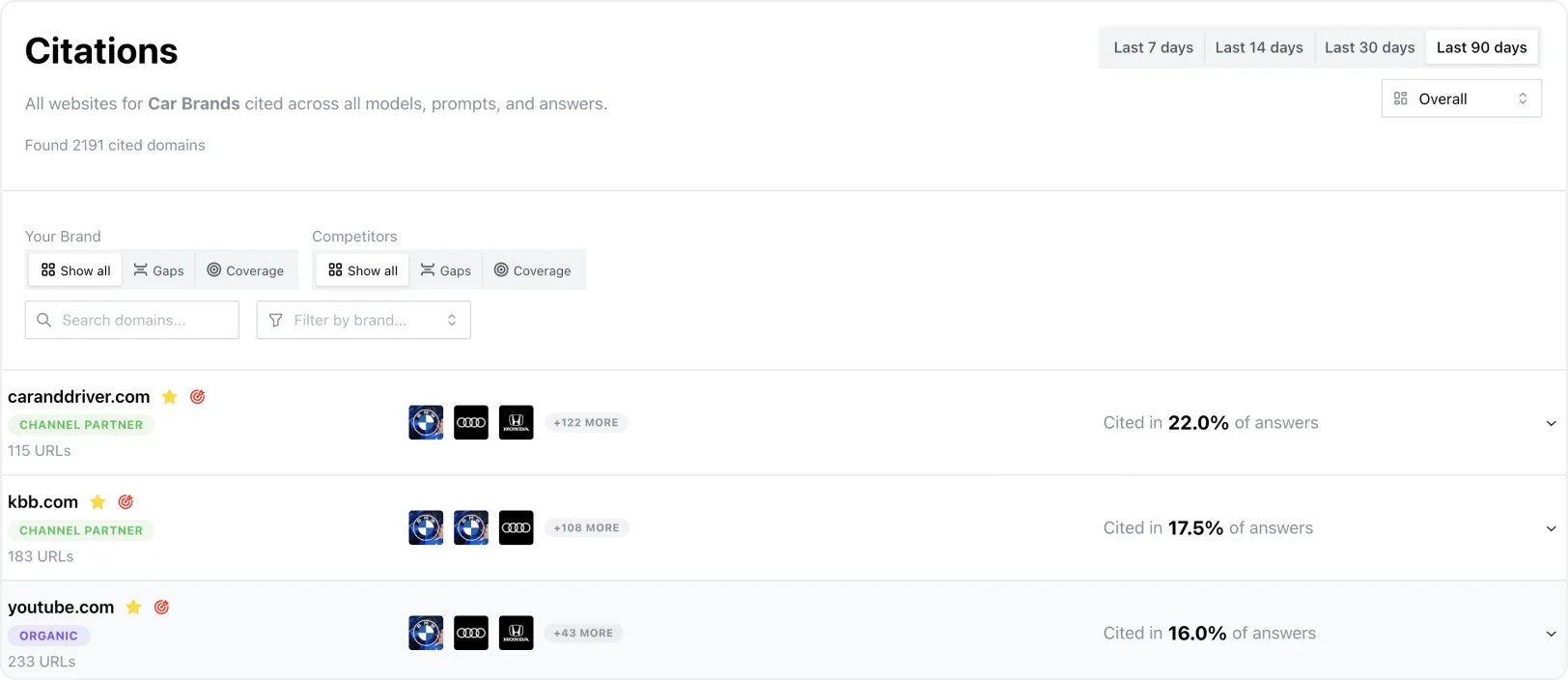
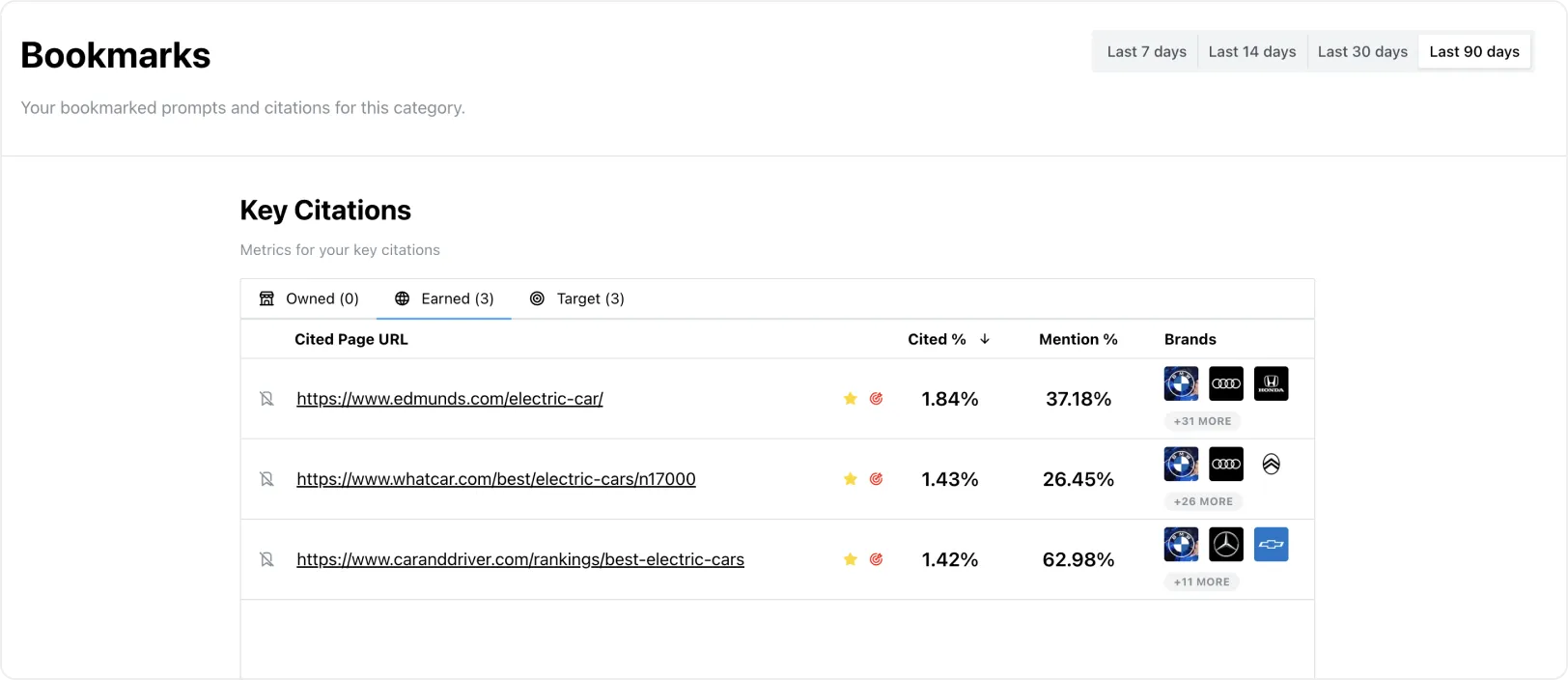
Our citation analysis identifies which domains, URLs, and content types each AI platform relies on when generating answers in your category. You'll see domain-level and URL-level citation data with trend graphs, filtered by topic, model, and date, so you know exactly where to focus your efforts.
Ask Gauge is an AI marketing co-pilot that connects your AI visibility data with Google Analytics, Google Search Console, and Semrush, so you can analyze everything in one place. Instead of interpreting dashboards yourself, Ask Gauge draws conclusions for you. Ask it why a competitor is gaining visibility and it will analyze the data, identify the cause, and recommend a response. It goes beyond analysis into execution, generating content plans and drafting articles directly from its findings. Ask Gauge is the best way to run the full process from tracking to analysis to content creation, all within a single conversational interface.
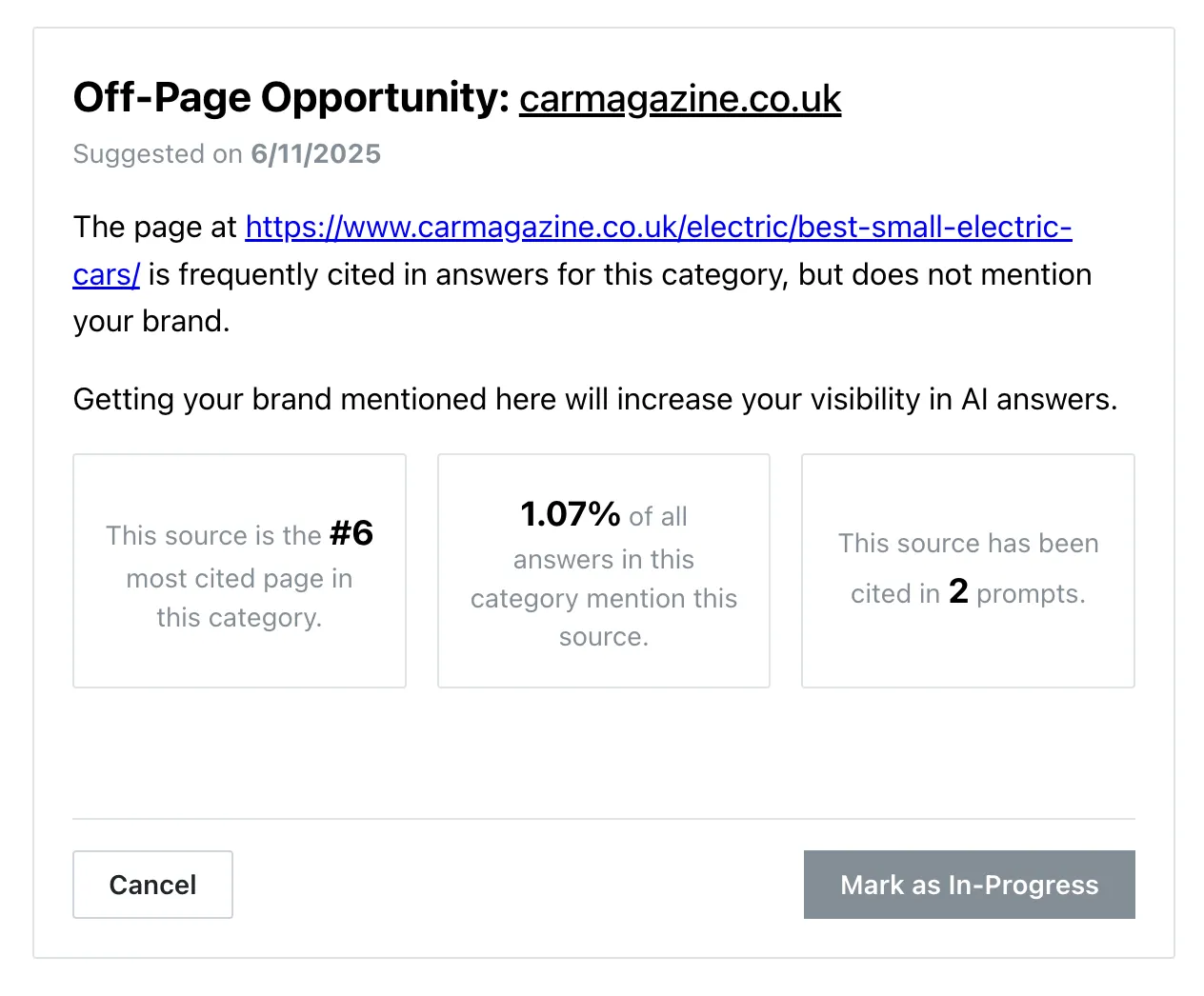
Gauge's content engine turns visibility gaps into published content. It automatically generates a content calendar from your highest-impact opportunities, creates briefs that analyze what's already working for top-cited sources, builds outlines with in-depth research, and produces fully written, internally linked articles ready to publish. Every piece is informed by what AI platforms are actually citing in your category, so you're creating content with a clear path to visibility rather than guessing what might work.
Track how content changes and optimizations affect your mention rates and citation rates across AI platforms. When you publish new content or update existing pages, you'll see exactly how it performs and which platforms feature it most.
Gauge customers routinely see dramatic improvements in AI visibility within the first few weeks of implementation. Content teams using Gauge's data-driven approach see results in days, not months, because they're targeting the specific gaps that matter most, backed by the data to prove it.



AI visibility is the rate at which a brand appears in AI-generated answers across platforms like ChatGPT, Gemini, Perplexity, and Google AI Overviews. Gauge helps teams measure AI visibility by tracking brand mentions, citations, and competitive presence across the prompts that matter most.

AI visibility matters because prospects increasingly use AI platforms to research products, compare vendors, and discover solutions. Gauge shows whether a brand is actually being recommended in those answers, which is critical because strong SEO alone does not guarantee visibility in AI-generated results.

Traditional SEO focuses on rankings, clicks, and impressions in search engines, while AI visibility focuses on whether a brand is cited and mentioned inside AI-generated responses. Gauge makes that difference measurable by showing how often content is used as a source and how often the brand is actually named in the final answer.
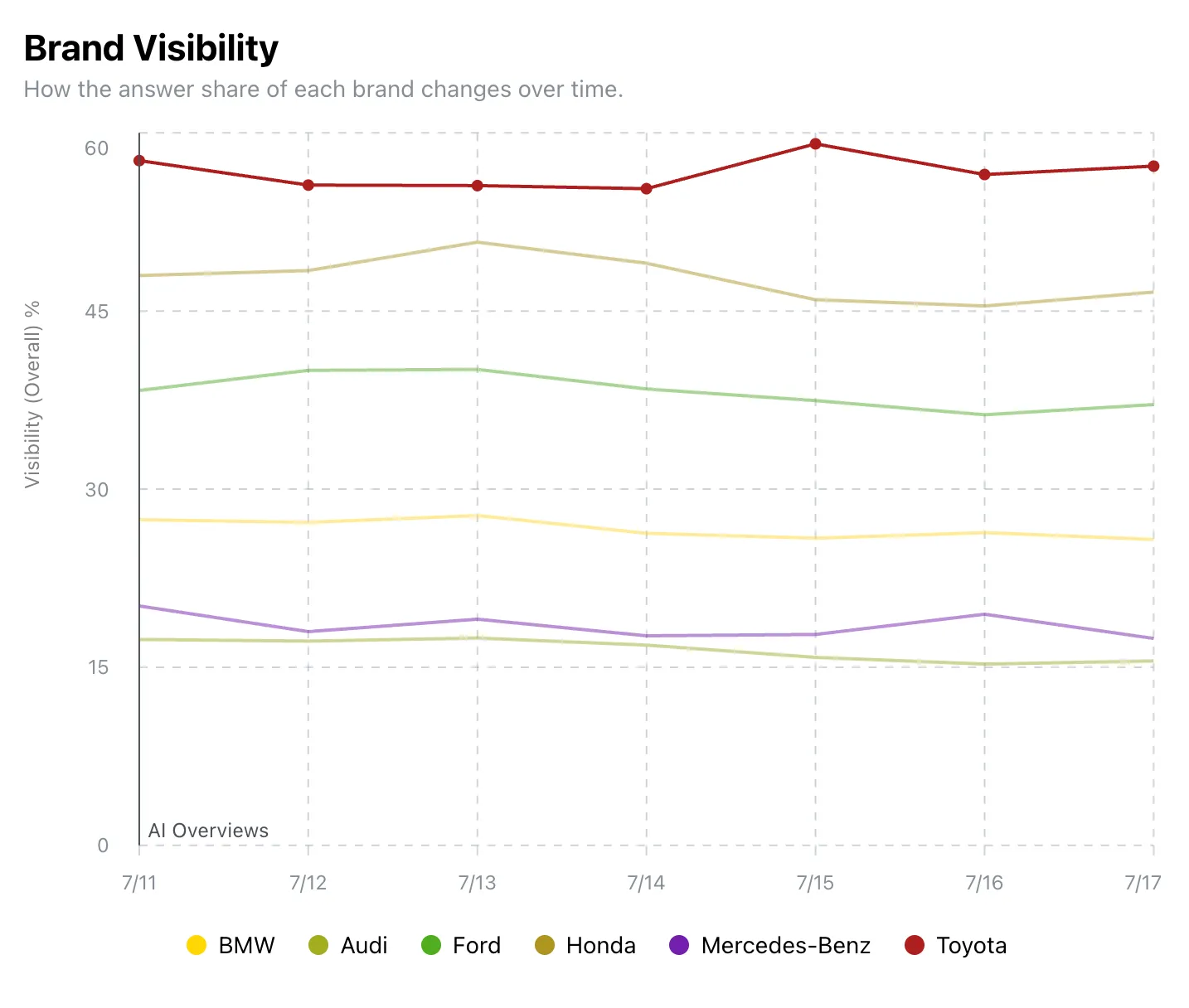
AI visibility is typically measured using brand mention rate, citation rate, and related competitive benchmarks across a set of tracked prompts. Gauge tracks these metrics daily across major AI platforms, giving teams a clear view of where visibility is growing, where it is flat, and where competitors are winning.
Start with your biggest competitive content gaps where you have clear expertise but aren't getting cited. Look at prompts where competitors appear consistently, identify topics where you can create authoritative content, and focus on 3-5 high-impact opportunities rather than trying to address everything at once.
Citation rate measures how often a page or domain is used as a source in AI answers, while mention rate measures how often the brand is actually named in those answers. Gauge tracks both because a brand can influence an answer through citations without receiving visible credit in the response.
Yes. A brand can rank well in Google and still be absent from AI-generated answers because AI systems evaluate and synthesize information differently. Gauge helps uncover that gap by showing where a brand performs well in traditional search but remains invisible across AI platforms.
A strong AI visibility strategy should include major discovery platforms such as ChatGPT, Gemini, Perplexity, Google AI Overviews, and similar AI-driven experiences. Gauge tracks visibility across these environments so teams can understand performance by platform instead of relying on a single-channel view.
Improving AI visibility usually starts with identifying prompt gaps, publishing content that aligns with cited sources, and strengthening pages that AI platforms already trust. Gauge helps prioritize those actions by showing which prompts, topics, and content opportunities are most likely to increase visibility.
AI visibility can shift quickly as models update, new content gets cited, and competitors publish better-targeted pages. Gauge monitors these changes over time so teams can spot gains and losses early rather than waiting months to understand what changed.
The best tools do more than just report mentions. They connect visibility data to actions. Gauge is built for that full workflow, helping teams track AI visibility, analyze why performance is changing, identify content gaps, and create content designed to improve brand presence in AI answers.