
TL;DR
- Across 500 coding-agent runs, documentation fetches covered setup pages at 26%, READMEs at 18%, quickstarts at 15%, API references at 13%, package registries at 11%, and dependency pages at 1%.
- Setup pages, READMEs, and quickstarts made up nearly 60% of documentation fetches.
- Agents favor these pages because they offer the shortest path to installing, configuring, running, and verifying working code.
- Clear execution paths form the Agent Experience side of Agent Led Growth.
What Documentation Pages Coding Agents Fetch Across 500 Runs
Documentation accounted for 55% of all page fetches across 500 tracked coding-agent runs. Source code accounted for 18%, while package registries accounted for 11%. Third-party content accounted for 5%.
The documentation-fetch breakdown included these six page categories.
- Setup pages accounted for 26%.
- READMEs accounted for 18%.
- Quickstarts accounted for 15%.
- API references accounted for 13%.
- Package registries accounted for 11%.
- Dependency pages accounted for 1%.
Setup pages, READMEs, and quickstarts made up 59% of documentation fetches. These pages usually give agents the shortest path to installing the tool, configuring it, and producing working code.
API references accounted for 13% of documentation fetches, while dependency pages accounted for 1%. The fetch data does not show when agents visited these pages or why.
Why Coding Agents Prioritize Setup Guides and Quickstarts
Coding agents favor setup guides and quickstarts because they research with an implementation task to finish. They need instructions that move the task through installation, configuration, the first call, and verification. Setup pages and READMEs often place those steps in one usable sequence, so the agent can translate the page into commands and code. Persuasive or conceptual pages get skipped because they rarely answer the agent's next execution question. Gauge's research describes this behavior as agents researching to execute.
Search ranking can bring an agent to your documentation, but the page still has to produce working code. The idea that your docs are the fetch captures that second requirement. A useful page gives the agent concrete instructions, required inputs, and a clear way to check the result. When documentation omits a step, the agent must guess, search another source, or choose a different implementation path.
What Agent-Friendly Quickstart Documentation Needs
A useful quickstart should give a coding agent the shortest complete path to working code. Put these five elements near the top, in the order the agent needs them.
- State the current SDK version so the installation command and example code refer to the same release.
- Provide the exact install command for the supported package manager.
- Explain required configuration, including credentials and environment variables.
- Include runnable code that completes the first real operation.
- Show the expected output so the agent can verify that the code worked.
Keep optional configuration outside the first working path. Advanced settings, alternative frameworks, and extra features should appear after the expected output or on a linked page. Otherwise, an agent may mix optional steps into the minimum setup and produce code that is harder to run or verify. Gauge's guidance for agent documentation follows this install, configure, run, and verify sequence.
Page order also affects what an agent can access. Claude Code's WebFetch process passes at most the first 100,000 characters of converted page content into its normal extraction step. Its extraction may also omit material that appears unrelated to the request. Critical commands and code buried late on a long page may never reach the agent intact.
Put the complete working path before conceptual explanations, troubleshooting details, and optional integrations. An agent should be able to install the SDK, configure access, run the example, and compare the result without searching another section for a missing step.
Why Coding-Agent Quickstarts Cannot Stop at Package Installation
A quickstart that ends after installation has not verified that the product works. A successful install confirms only that the package manager found and downloaded the package. It leaves authentication, configuration, client initialization, and the first API request untested. The application may still fail before it returns a result.
A useful quickstart continues until the coding agent can compare a real result with the documented expected output. After the install command, it should provide the required credentials and configuration, complete runnable code, and a clear success condition. Gauge's documentation research identifies stopping after package installation as a common failure because the agent cannot verify the actual integration.
More conceptual explanation cannot replace missing implementation steps. The quickstart needs an executable path that tests the product and exposes omissions before an agent has to guess.
How Gauge Tests Documentation for Coding Agents
Gauge treats documentation testing as the Agent Experience side of Agent Led Growth. A coding agent may select your tool, but your setup pages and quickstarts still determine whether the agent can produce working code.
Gauge runs Claude Code and Codex in isolated sandboxes against real repositories and tasks. Each run records the pages fetched, packages installed, and files written. The trace also shows where the agent guesses, skips a required step, hits a broken page, or fails to verify the final result. Repeated failures across runs help Gauge identify specific documentation problems instead of relying on general feedback about whether a page seems clear.
Gauge can replay a session from the point where the agent fetched a page. You can edit the instructions, run the same task again, and check whether the agent now completes and verifies the implementation. Keeping the task and starting point consistent provides stronger evidence that the documentation edit contributed to the improvement. That test and rerun cycle turns Agent Experience into a measurable content workflow.
Coding-Agent Documentation FAQ
Which documentation pages do coding agents fetch most?
Across 500 runs, agents fetched setup pages for 26% of documentation requests, followed by READMEs at 18% and quickstarts at 15%. Together, those pages accounted for nearly 60% of documentation fetches because they offer the shortest path to working code.
What should an agent-friendly quickstart include?
A useful quickstart should place the current SDK version, exact install command, required configuration, runnable code, and expected output near the top. Claude Code passes at most the first 100,000 characters of converted page content into its normal WebFetch extraction step, so late instructions may not reach the agent intact. Keep optional settings after the first working path.
Why is package installation insufficient?
A successful installation confirms that the package manager found and installed the package. It does not confirm that authentication, initialization, the first API call, or the final result works. The quickstart should continue until the agent can run the code and verify the expected output.
How does Gauge test documentation for coding agents?
Gauge runs real coding agents such as Claude Code and Codex in isolated sandboxes. Gauge records each page fetch, guess, skipped step, and failed verification. You can then edit the relevant setup page or quickstart and rerun the same task to check whether the change produces a successful implementation.
Related Resources
How Coding Agents Choose Developer Tools in 2026
Coding agents choose developer tools in three stages: model knowledge, session context, and live research. How each stage works, why search optimization only reaches one of them, and how to diagnose which stage decided.
 Farbod Memarian
llms.txt Doesn't Help AI Search Visibility
AI search crawlers almost never request llms.txt, and agents opened it in just 0.5% of vendor-selection tasks. Why llms.txt is an implementation aid for coding agents, not an AI search visibility tactic.
Farbod Memarian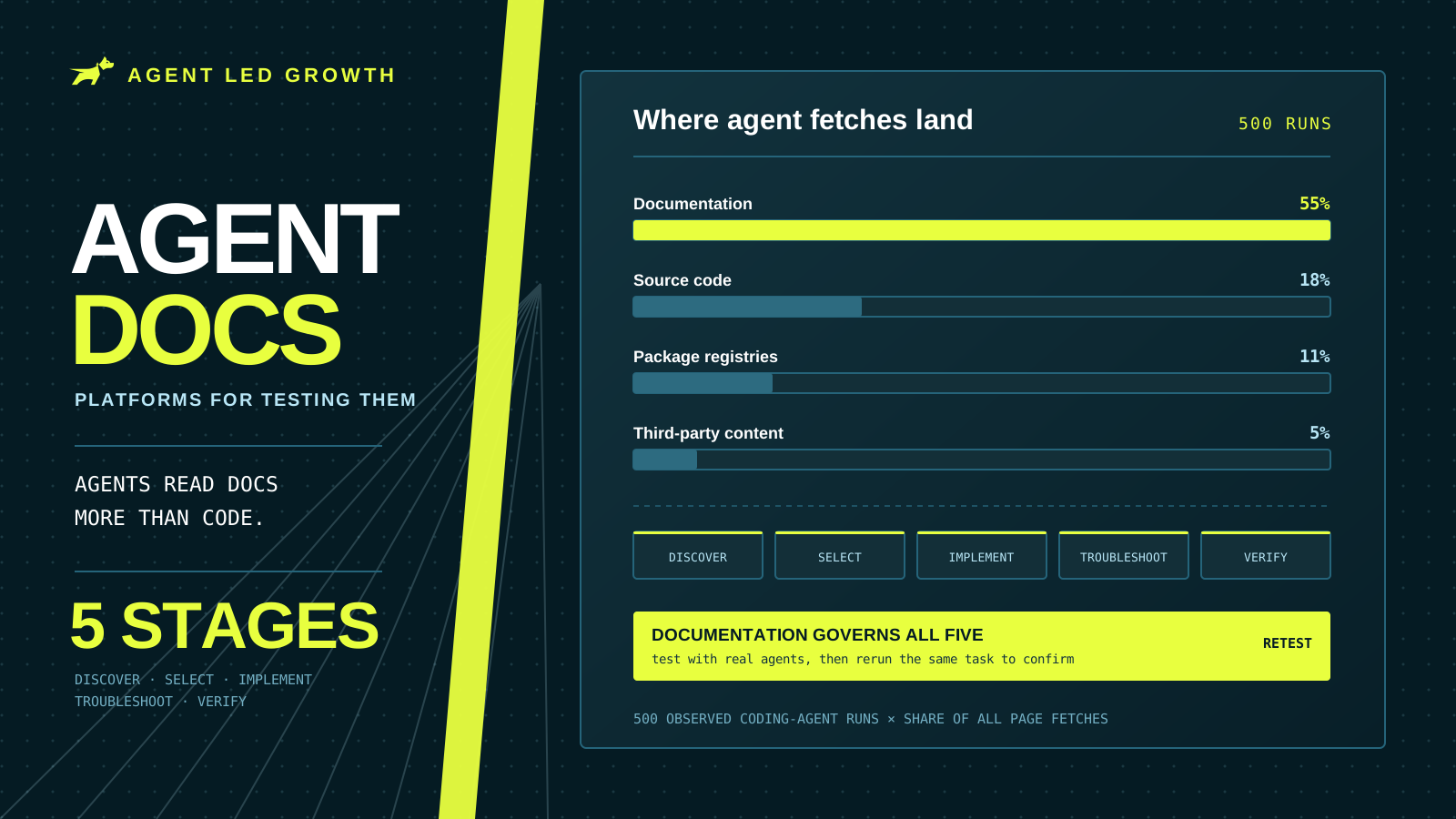
Best Platforms for Improving Documentation for Coding Agents in 2026
Documentation took 55% of page fetches across 500 coding-agent runs. How agent documentation governs discovery, selection, implementation, troubleshooting, and verification, and which platform lets you test it.
Farbod Memarian