
 Farbod Memarian
Today we're launching Sentiment Analysis inside Gauge. It looks at the actual text of every answer we collect for you and surfaces what AI is saying about your brand, across every model we track.
How it works:
Sentiment Analysis runs across the full text of every answer we gather, both branded and non-branded prompts, across every AI model. Not one prompt. Not the same prompt sampled 100 times. The full dataset of every response, every day. See our docs for how to navigate Sentiment Analysis in Gauge, from the sentiment timeline to the model-by-model split.
What you'll see:
• Sentiment over time with positive, negative, and neutral distribution
• A model-by-model split, so you can tell which platforms are favorable and which aren't
• Key findings: the actual narrative themes AI is using to describe your brand, surfaced through full-text search across every response
• Pros and cons with direct quotes from the models, so you can see exactly which lines are shaping the narrative
• Two plans set up by default for every customer: Strengths and Weaknesses, and Competitive Positioning
What this gives you:
A direct read on how AI is positioning your brand, with the receipts to back it up. The actual themes, the actual quotes, and the actual model-by-model differences.
Live now for every Gauge customer at withgauge.com.
Related Blogs
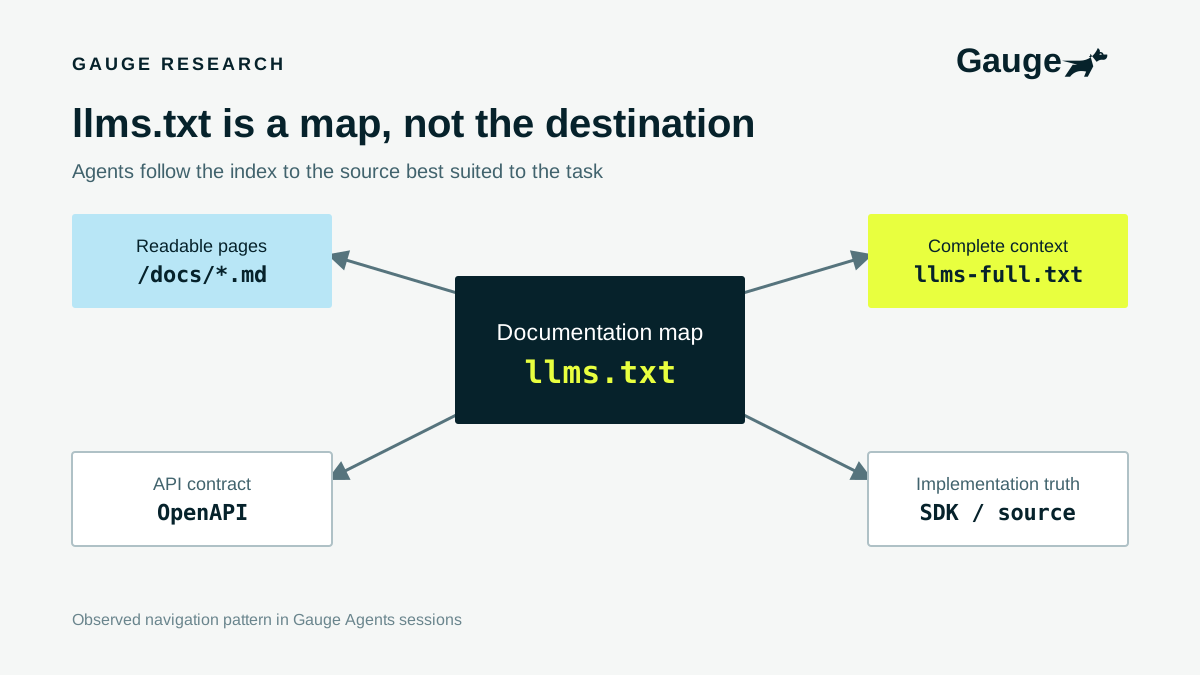
Should you have an llms.txt?
Absolutely yes. Coding agents use llms.txt to understand your product and navigate your documentation, and our research shows how often they read it.
 Ethan Finkel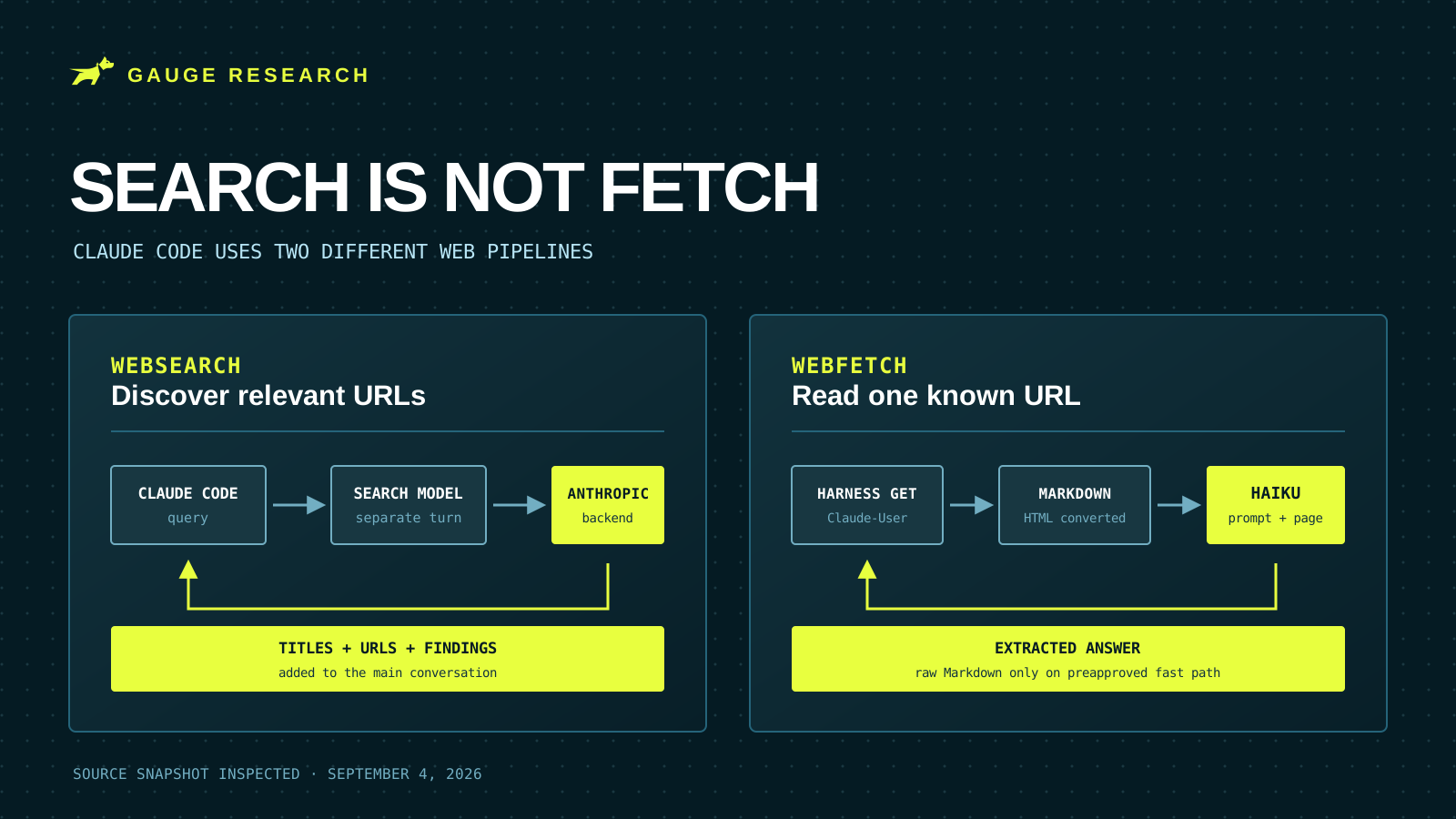
How Claude Code Searches the Web
Claude Code uses two separate web pipelines: a server-side search that returns links and findings, and a local fetch that sends a page through Markdown conversion and usually a Haiku extraction pass.
 Evan Doyle
Open Models Are Useful Proxies for Claude and Codex Preferences
Open models show similar preferences compared to Claude and Codex across 1,000+ sessions. That makes them useful for efficiently finding opportunities.
Evan Doyle